Vertical Gardens
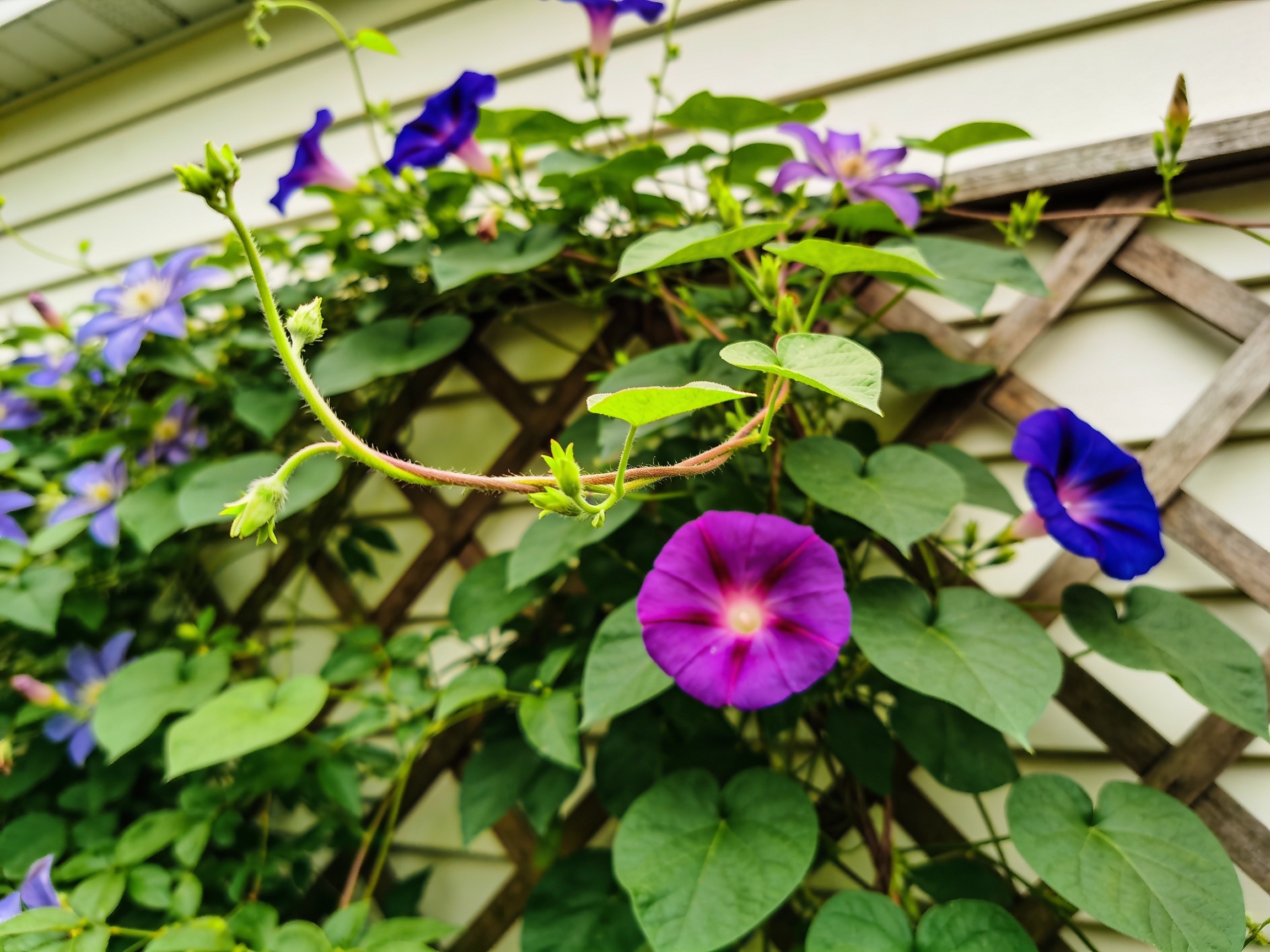
A vertical garden turns a bare fence or wall into a living display — and it's one of the best options when ground space for a conventional bed is limited.
What to Build On
A trellis (wood or iron), string, fishing line, or mesh fabric all give climbing vines something to grab onto — the basic idea is simply providing a structure for the plant to attach to. Vines climbing a wood or iron fence attach naturally, and a rough brick exterior usually needs no extra help at all. Hanging planters extend the idea further, working well on porches, fence posts, or balconies regardless of how much ground space you actually have.
What to Plant
Climbing roses and clematis are classic choices, alongside morning glories, honeysuckle, ivy, and in some regions grape vines. Hanging baskets add color at eye level or higher with carnations, petunias, daisies, and geraniums. A stacked-box vertical garden — square planters stacked upward with flowers facing outward — is another approach that works well indoors, outdoors, or even poolside without the weeding or chlorine exposure a ground bed would face.
A vertical garden works in almost any yard, no matter how small — the technique exists specifically for spaces too tight for a conventional bed.