Venus fly trap snaps its hinged, tooth-fringed leaves shut around unsuspecting insects in under a second — one of the fastest movements in the entire plant kingdom.
Native to a small, boggy region of North and South Carolina, Venus fly trap has evolved to catch and digest insects as a way of supplementing the poor, nitrogen-deficient soil of its native wetlands, and it remains one of the most famous carnivorous plants in the world.
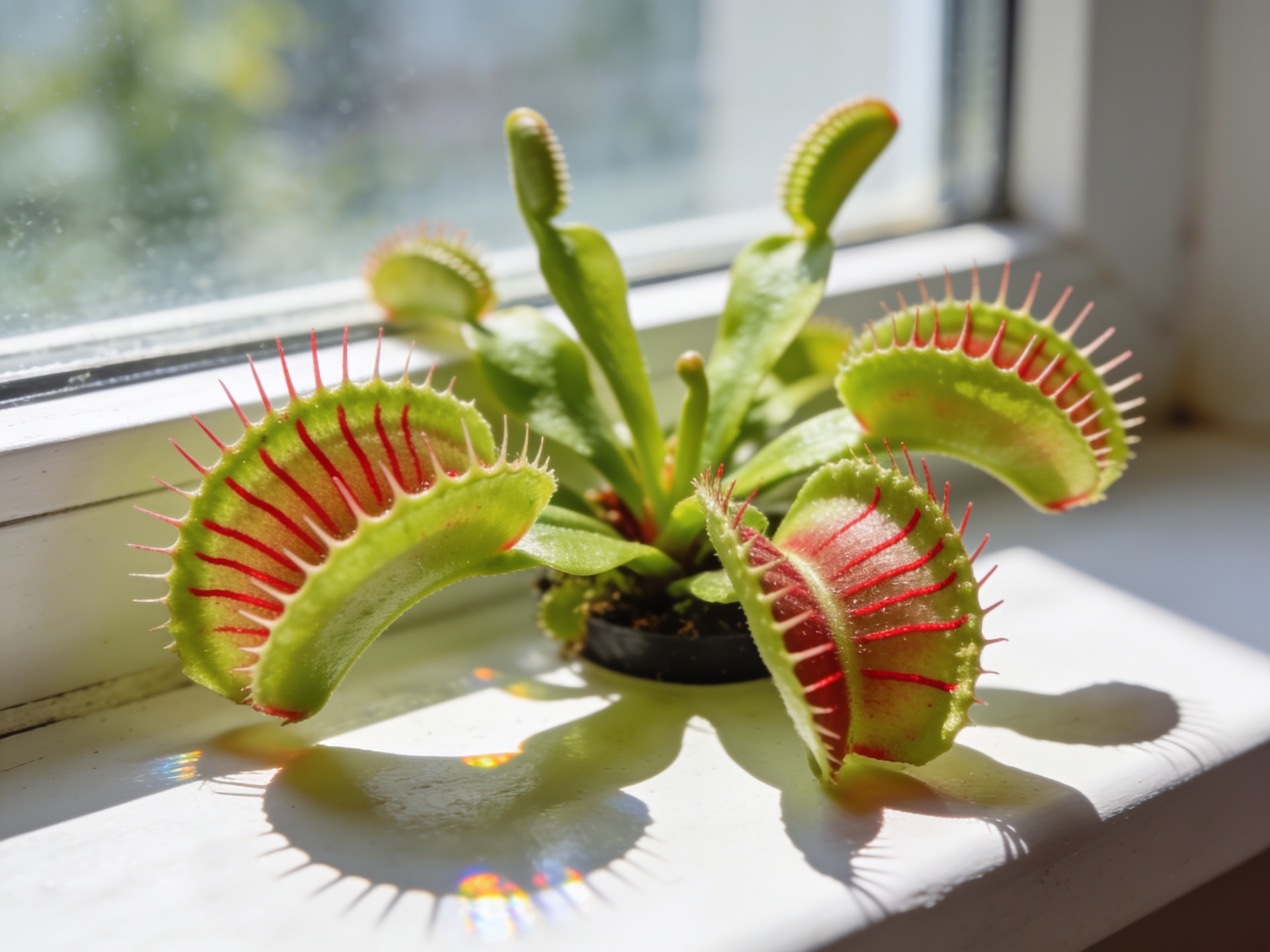
Venus fly trap wants very bright light, consistently moist, nutrient-poor soil (a peat and sand mix), and only distilled or rain water — tap water minerals and regular potting soil nutrients will kill it. Never feed it human food or trigger its traps needlessly, since each trap can only close a limited number of times before it stops working.
Venus fly traps need a cool, dormant winter rest period, similar to their native climate, to stay healthy long-term — skipping this dormancy is a common reason houseplant specimens decline after a year or two.