Variety of Rose Colors
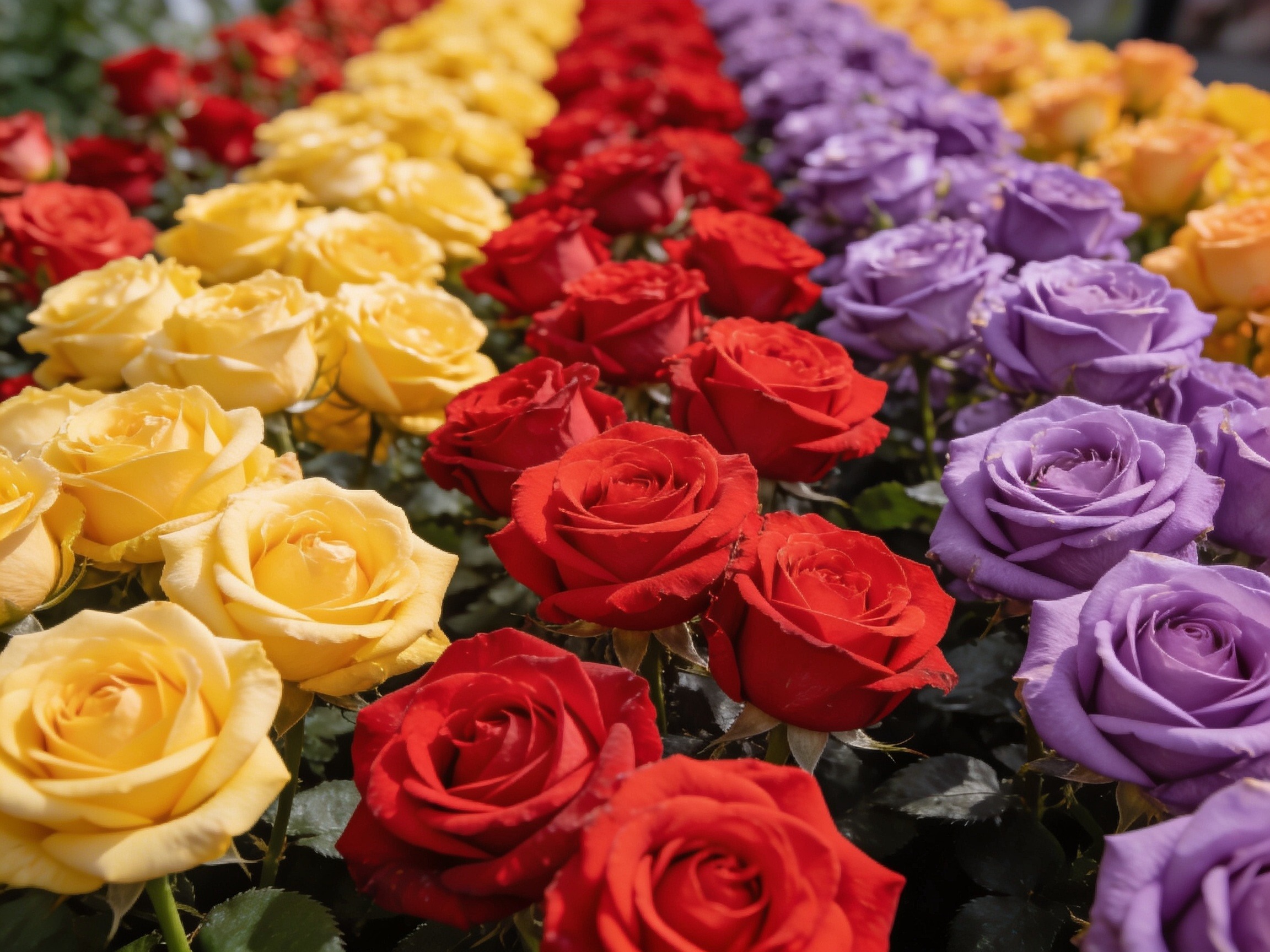
Modern rose breeding has produced an extraordinary range of colors, far beyond the classic red, and even multicolored or color-shifting varieties that change hue as the bloom ages.
Beyond the Basics
Bicolor roses, with petals showing two distinct colors, and striped varieties add visual complexity beyond a single solid hue. Some varieties even shift color as they age — a bloom that opens apricot might fade to soft pink over several days, giving a single bush multiple color tones at once.
True blue roses don't naturally exist — what's marketed as "blue" roses are typically deep lavender or mauve, since roses lack the specific pigment needed to produce genuine blue.
A rose's color can shift slightly depending on soil pH and sun exposure, so the exact shade shown on a plant tag or catalog photo may vary somewhat once grown in your own garden.
Choosing a Palette
Sticking to a limited color palette — two or three complementary shades — generally reads as more intentional and cohesive in a garden than mixing every available color together.