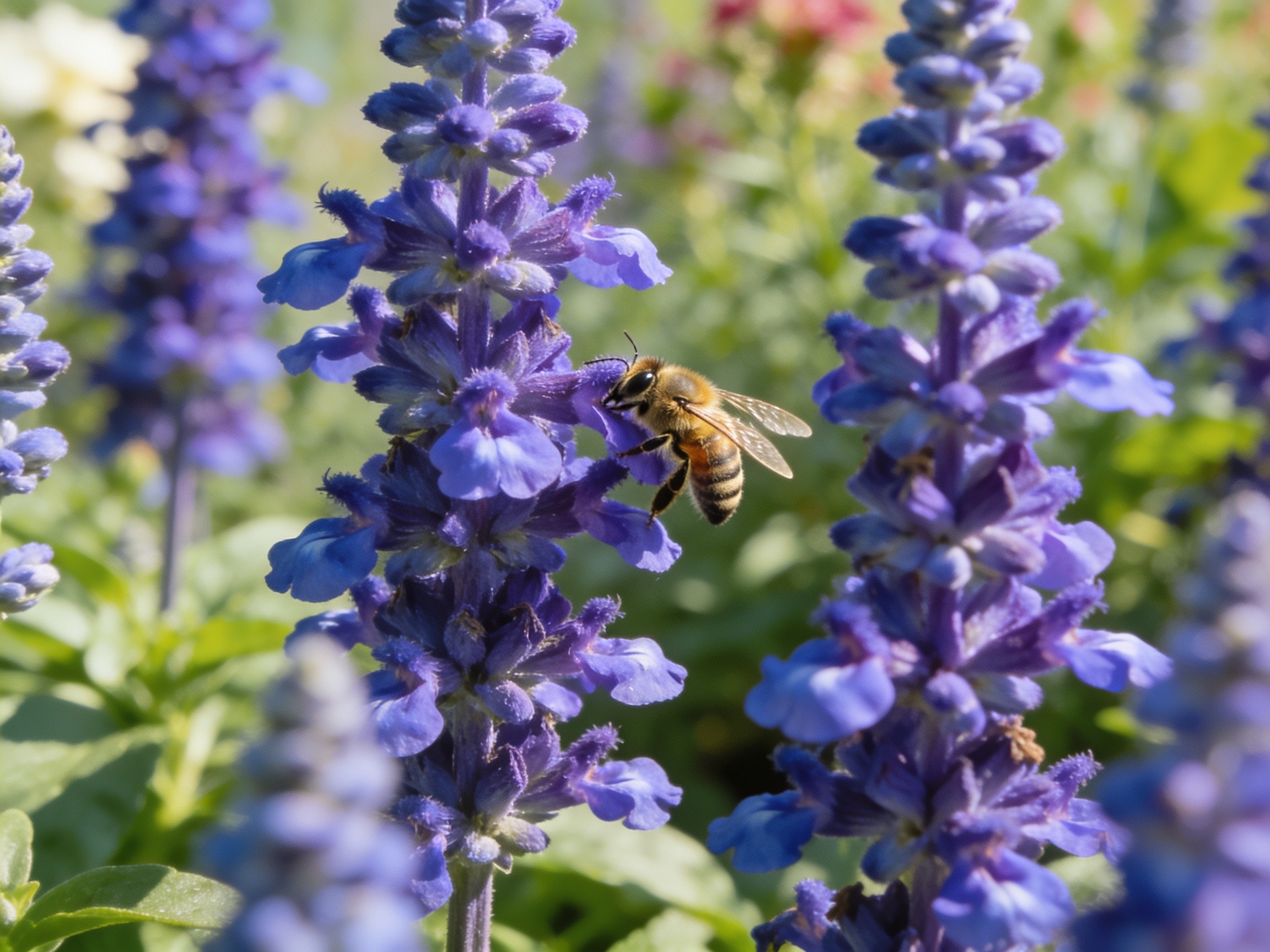
Salvia, or ornamental sage, is one of the largest genera in the mint family, sending up tall spikes of tubular flowers in shades of blue, purple, red, and white that hummingbirds and bees can't resist.
Garden varieties like Salvia nemorosa bloom for months with regular deadheading, and their aromatic, textured foliage makes them a favorite for cottage borders, pollinator gardens, and dry, sunny spots where less rugged perennials fade.
Salvia takes its name from the Latin "salvere," to heal, and has long symbolized wisdom, good health, and domestic virtue — a plant traditionally believed to bring protection to the home and garden.
Give salvia full sun and well-drained soil; it tolerates heat and drought once established but resents wet feet in winter. Shear plants back by about a third after the first flush of bloom to encourage a strong rebloom later in the season. Most perennial salvias are hardy and low-maintenance, needing little more than an annual spring cutback of old woody growth.
Culinary and medicinal sage (Salvia officinalis), a close relative of ornamental salvias, has a long history of traditional use as a digestive aid and sore-throat gargle, and is still widely grown in herb gardens today.