Rosemary
Rosemary (Salvis rosmarinus, formerly Rosmarinus officinalis) is a woody, needle-leaved Mediterranean evergreen with a piney, resinous fragrance that carries as much presence in the garden as in the kitchen. Long associated with memory and remembrance in folklore, rosemary can live for decades in the right climate, slowly developing a gnarled, shrub-like structure.
Growing Rosemary
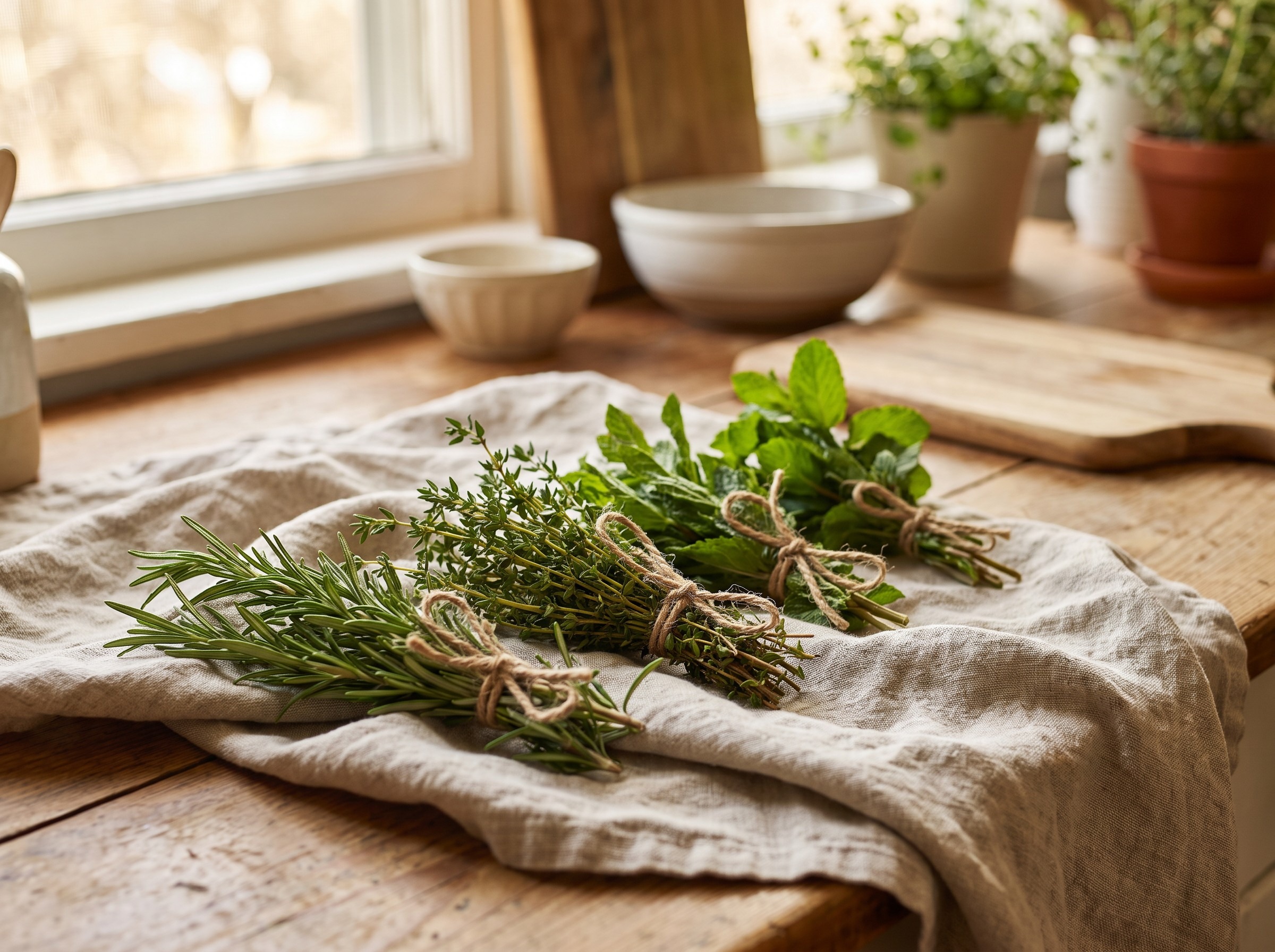
Rosemary demands excellent drainage above all else — more plants are lost to soggy roots than to cold. It's only reliably hardy to about 20-30°F depending on the variety, so gardeners in colder climates typically grow it in a pot that comes indoors for winter, or treat it as an annual. Once established outdoors in a mild climate, rosemary is remarkably drought-tolerant and can be shaped into hedges, topiary, or left to sprawl.
Culinary Uses
Rosemary's strong, piney flavor holds up well to long roasting, making it a natural match for lamb, roasted potatoes, and rustic breads like focaccia. Because the flavor is potent, whole sprigs are often used and removed before serving, or the needles are finely minced to distribute a more subtle flavor throughout a dish.
Woody rosemary stems make excellent natural skewers for grilled vegetables or meat — strip most of the leaves, leaving a tuft at the top, for a fragrant, functional garnish.