Rose of Sharon
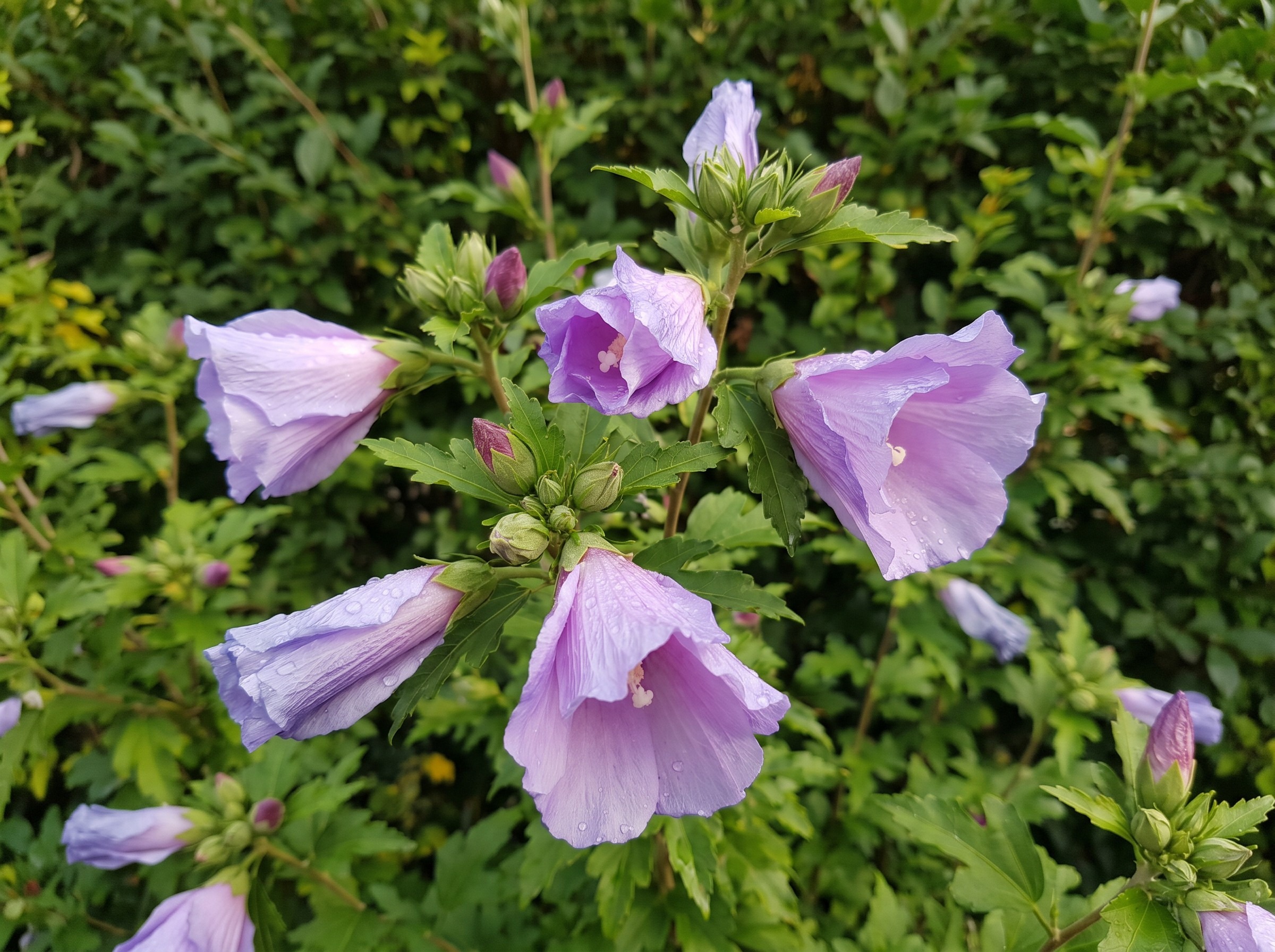
Rose of Sharon (Hibiscus syriacus), also known as Rose of Althea, earns its keep by blooming late — right when many other shrubs have already finished for the season.
Late Bloom, Big Payoff
Flowering runs from July through September, in white, lavender, light blue, or red, sometimes as double blooms — individual flowers last only a day, but a steady supply of new buds keeps the shrub flowering heavily through the whole stretch. Each vase-shaped bush grows fairly tall with small, deeply lobed leaves and a striking central stamen typical of the hibiscus family. Its heavy, showy bloom also draws bees, which is part of why some gardeners value it in a pollinator-friendly yard — though it can also attract bees you'd rather not have around.
Growing It Well
Rose of Sharon wants well-drained soil and full sun — plants grown in too much shade become more prone to fungal problems. It tolerates a wide pH range and even some salt, and its heat tolerance makes it especially popular in the southeastern U.S. If shaping it into a hedge, prune in early spring before new growth starts, so you don't disrupt the bloom cycle. Watch for spider mites in hot, dry conditions and aphids on new growth — both are manageable with an occasional insecticide or diluted bleach spray.
Rose of Sharon makes an attractive specimen hedge but not a true privacy screen — as a deciduous shrub, it only carries dense foliage during summer.