Poppy's tissue-thin, silky petals seem to glow when backlit by the sun, a fleeting but unforgettable feature of one of the most recognizable wildflowers in the world.
Native across Europe and Asia, poppies have become a powerful symbol of remembrance following World War I, when red field poppies famously bloomed across the disturbed battlefields of Flanders. Individual blooms last only a day or two, but a well-established patch reflowers continuously for weeks.
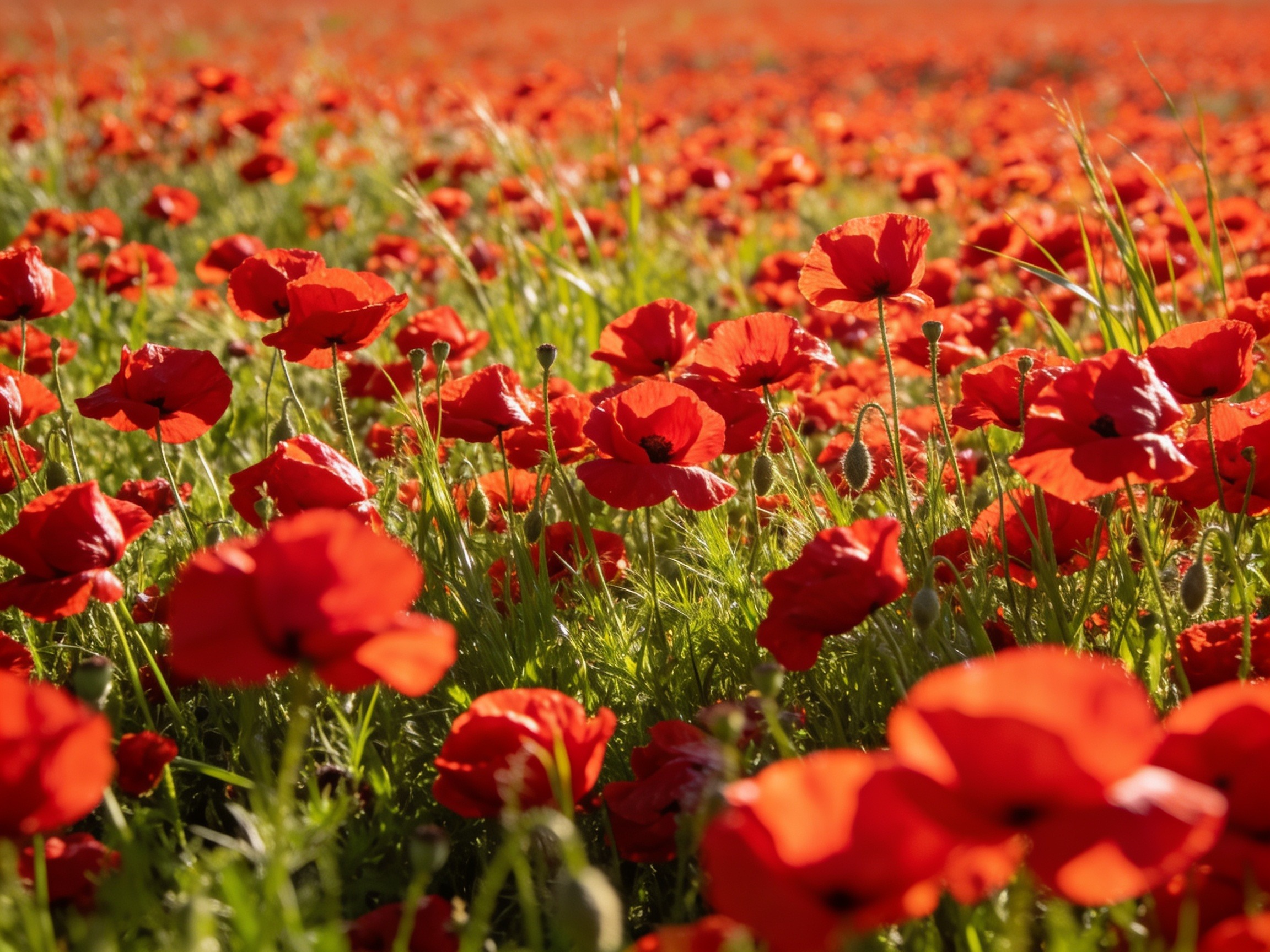
Poppy symbolizes remembrance and eternal sleep, worn each November as a memorial symbol for fallen soldiers, a tradition rooted in the fields of red poppies that bloomed across World War I battlefields.
Poppies want full sun and average, well-draining soil, and are best direct-sown, since their deep taproot resists transplanting. Once established, poppies self-seed generously, often returning reliably in the same spot year after year with no further effort.
The opium poppy is the source of morphine and other powerful medicinal and narcotic compounds, though the common ornamental poppies grown in most home gardens contain far lower levels and are grown strictly for their beauty.