Patio Gardening
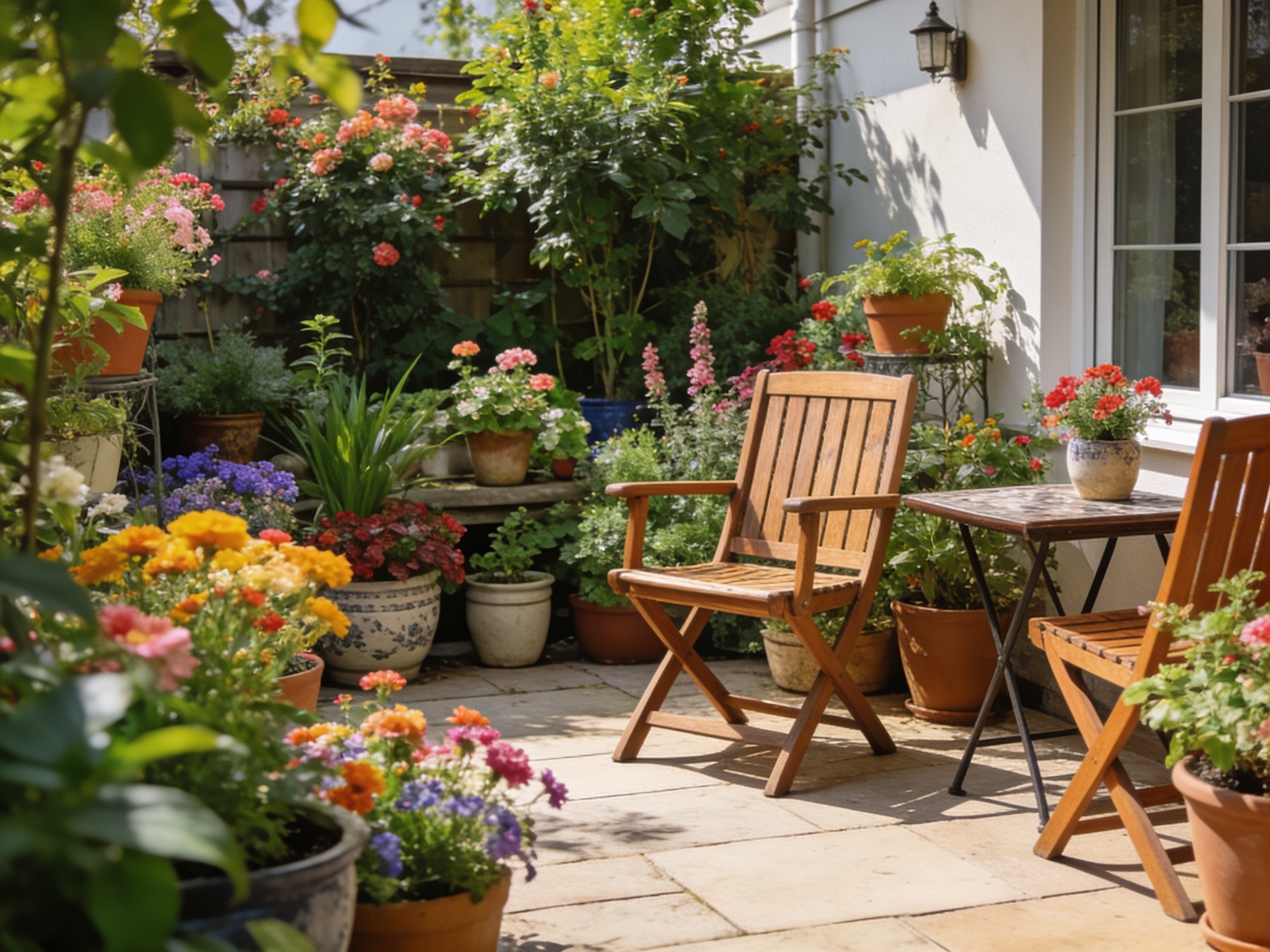
A patio garden trades in-ground beds for containers, which actually opens up more flexibility — pots can be rearranged, swapped seasonally, and moved to chase the best light.
Choosing Containers
Bigger pots hold moisture longer and buffer roots against temperature swings better than small ones, making them more forgiving for a patio's often hotter, more exposed conditions. Always choose pots with drainage holes — a container without one is one of the most common causes of root rot.
Grouping several pots of varying heights together creates a fuller, more intentional look than scattering single pots around the space.
A patio's heat-radiating pavement often runs hotter and drier than a typical garden bed — plants there may need more frequent watering than the same species would in the ground.
Working with Heat and Reflected Light
A patio against a light-colored wall or near reflective pavement can run hotter than the surrounding garden, which sometimes calls for slightly more heat- and drought-tolerant plant choices than the general growing zone would suggest.