Passion flower's intricate, otherworldly bloom — a halo of thread-like filaments framing a crown-like center — makes it one of the most visually complex flowers in any garden.
Native to the Americas, passion flower is a fast-growing vine that, depending on the species, produces edible passionfruit as well, making it a favorite for gardeners who want both an ornamental climber and a harvest.
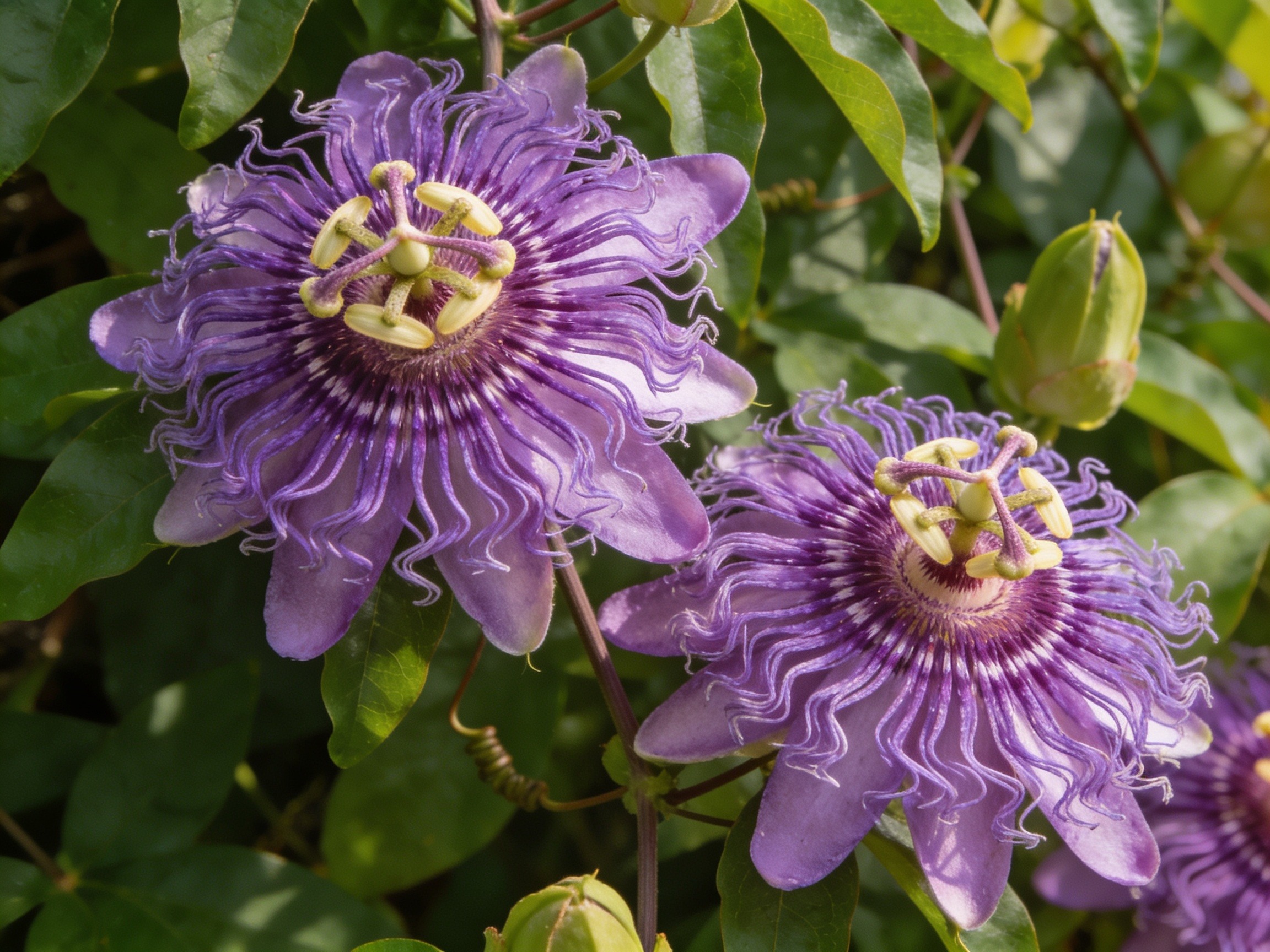
Passion flower gets its name from Spanish missionaries who saw the flower's parts as symbols of Christ's Passion, and it carries meanings of faith and spiritual belief today.
Passion flower wants full sun and well-draining soil, climbing quickly by tendrils onto any trellis or fence provided. It can become quite vigorous and even weedy in warm climates, so many gardeners prune it back hard each year to keep it in bounds.
Passiflora incarnata has a long history in herbal medicine as a calming remedy for anxiety and sleeplessness, commonly sold as a tea or tincture.