Organic Pest Control
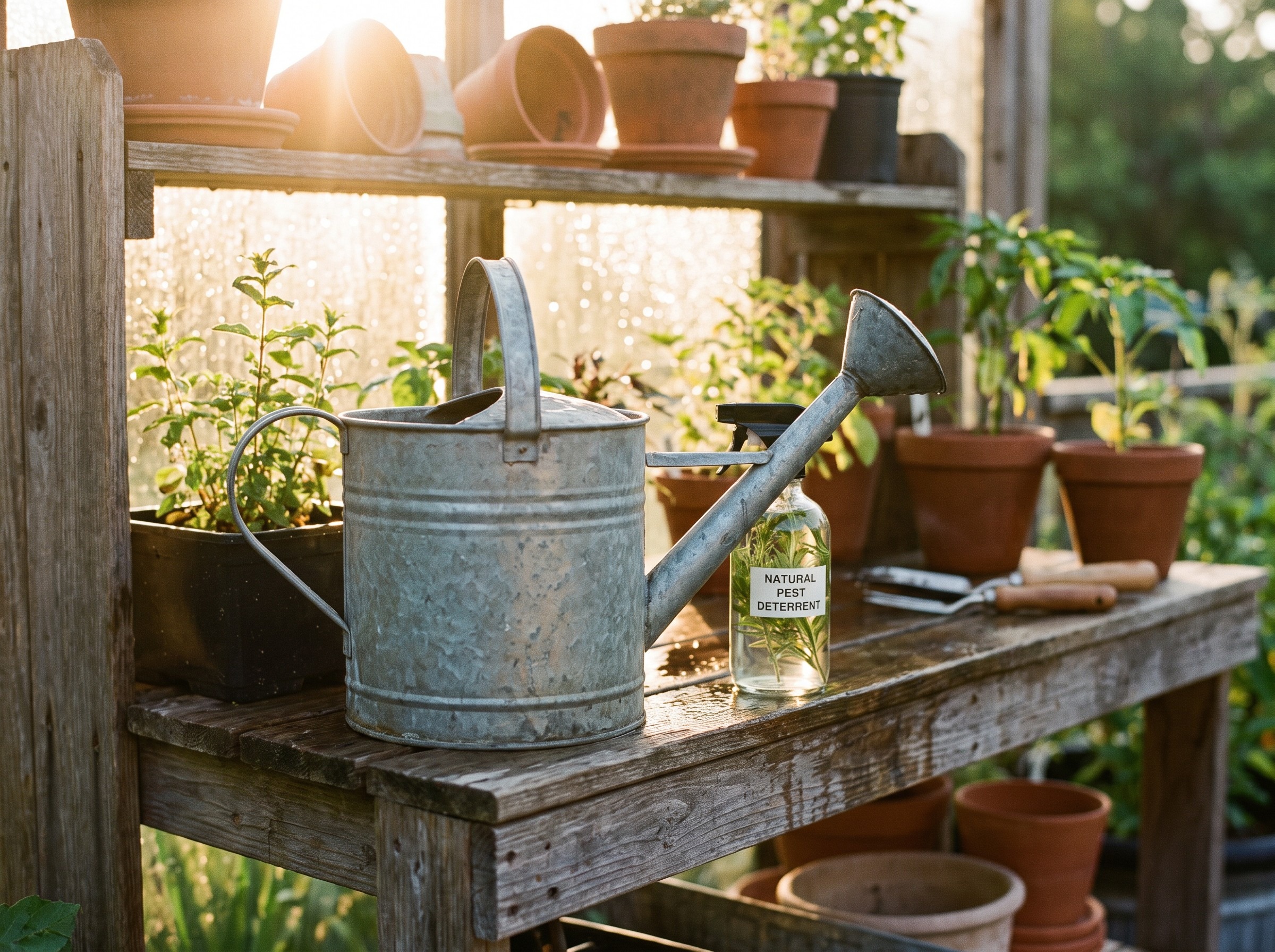
Most organic pest control comes down to identifying the actual pest correctly before treating — the right remedy depends entirely on what's actually causing the damage.
Identify Before You Treat
Chewed leaf edges, sticky residue, and small holes each point to different pests, and treating the wrong one wastes time and can even harm beneficial insects unnecessarily. Inspecting the undersides of leaves and checking at different times of day helps catch pests that aren't visible during a quick daytime glance.
Once identified, targeting the specific pest — whether by hand-picking, a barrier, or a specific organic treatment — is far more effective than a generic all-purpose spray.
Many common pests, like slugs and Japanese beetles, are actually easiest to control by hand-picking in the early morning, when they're slow and easy to spot.
Building Resilience Over Time
A garden with diverse plantings, healthy soil, and a mix of beneficial insects tends to have fewer severe pest outbreaks over time than one relying purely on reactive treatments after damage appears.