Oleander blooms nearly nonstop through the hottest, driest months when most other flowering shrubs have given up — but every part of this tough Mediterranean staple is highly toxic, a tradeoff worth knowing before planting.
Native to the Mediterranean region and parts of Asia, oleander has been planted along highways and in coastal gardens for generations thanks to its extreme tolerance of heat, drought, salt spray, and neglect, though its toxicity means it should be kept well away from children, pets, and livestock.
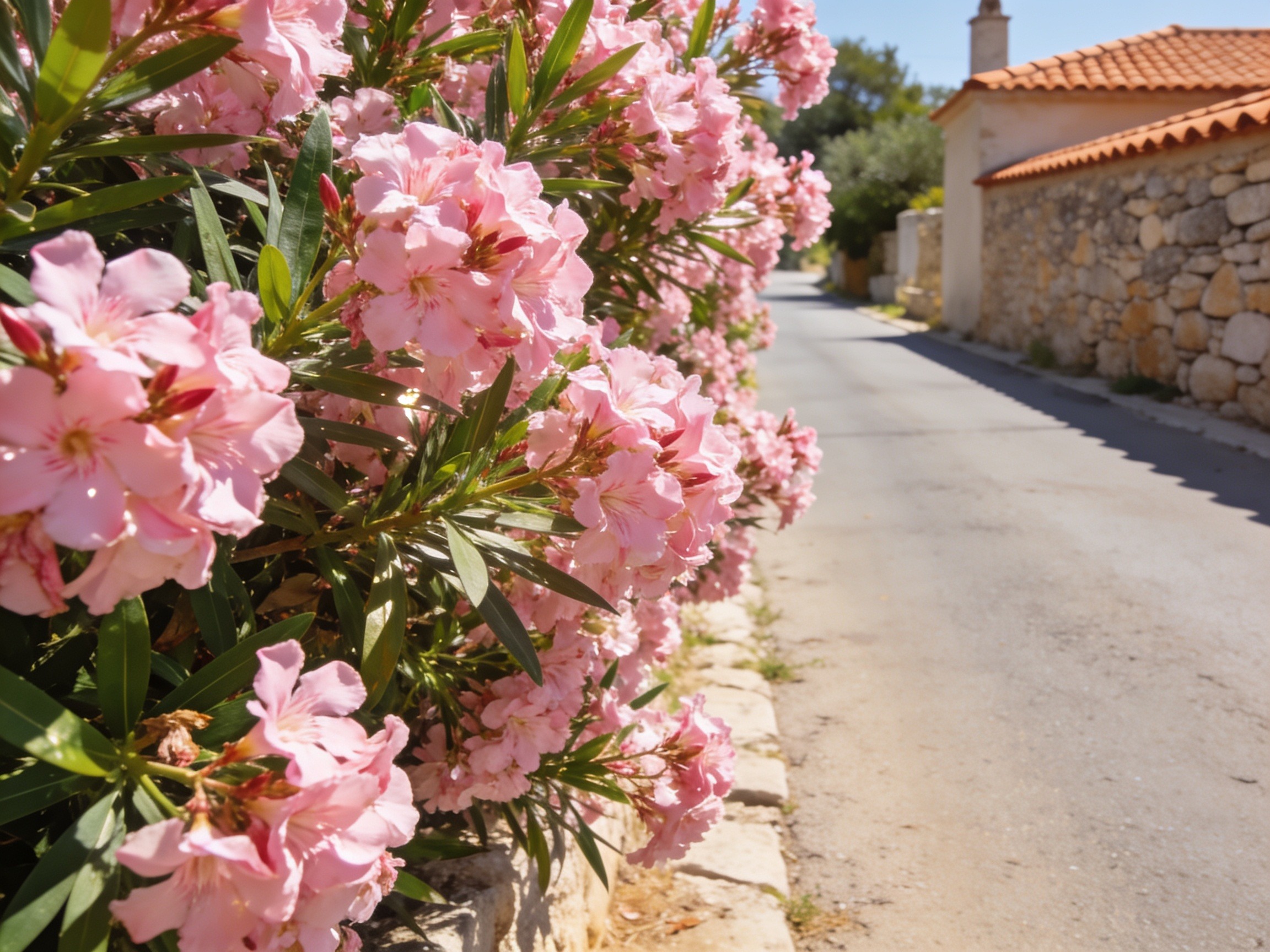
Oleander wants full sun and tolerates poor, dry, even salty soil with ease, making it a go-to shrub for tough highway medians and coastal landscaping. It needs virtually no supplemental water once established beyond an occasional deep soak in extended drought.
Every part of the oleander plant — leaves, flowers, stems, sap — is highly toxic if ingested by people, pets, or livestock, and even the smoke from burning oleander clippings can be hazardous. Wear gloves when pruning, and never use its wood for skewers or cooking fires.