
Lily Gardens
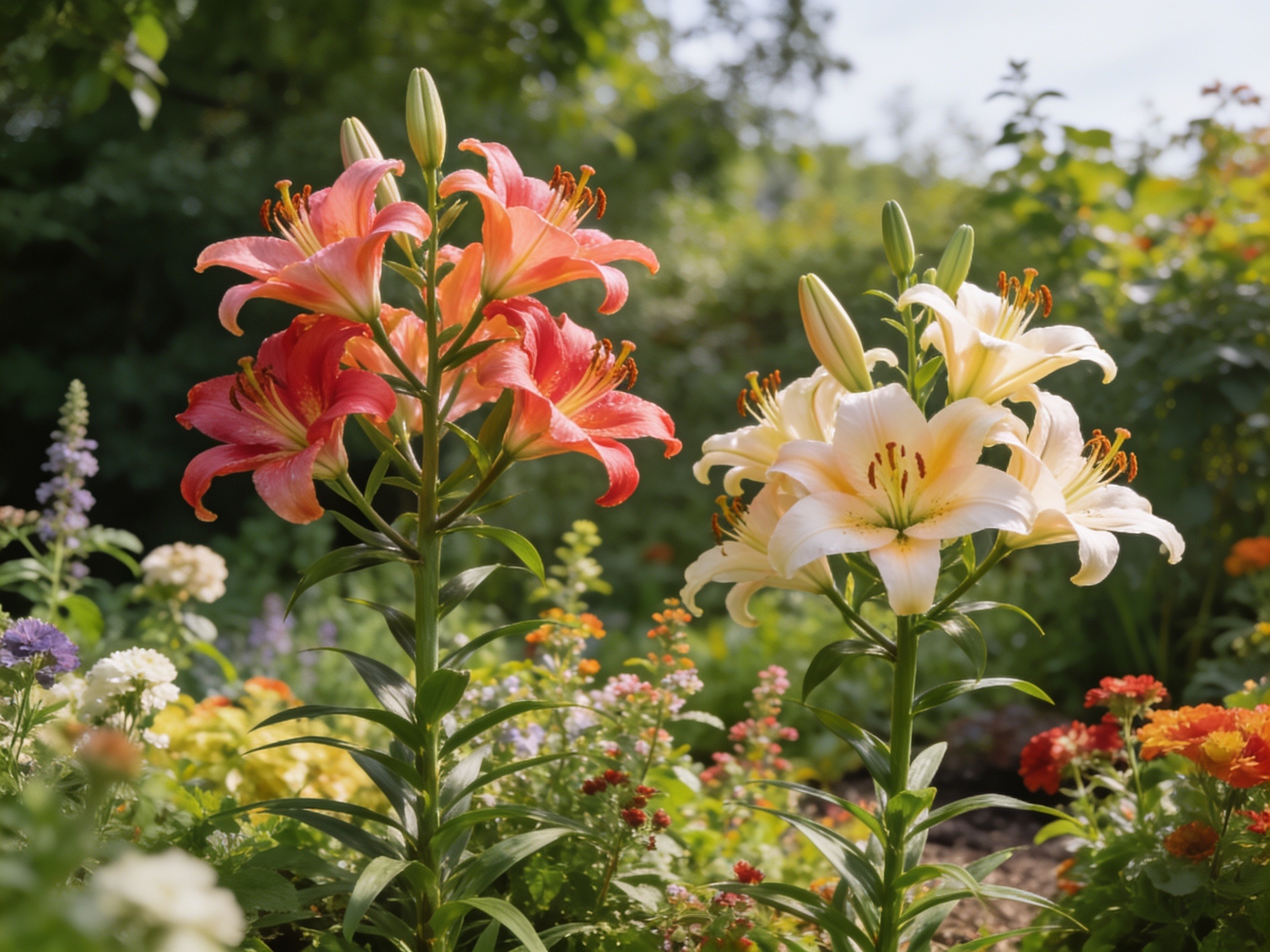
Unlike most bulbs, lilies never truly go dormant, which means they should never be allowed to dry out completely — plant them as soon as possible after buying, rather than storing them for later.
Getting the Site Right
Lilies have three real requirements: deep, loose, fast-draining soil; consistent moisture through both active and inactive growth; and cool, shaded roots with sun or bright filtered light at the top. Most lilies want a sunny spot, though a little late-afternoon shade is fine — in hotter inland areas, morning sun with afternoon shade (or all-day bright filtered light) works better. Before planting, trim off any damaged parts of the bulb and dust the cuts with a fungicide.
Water and Aftercare
Water thoroughly after planting and mulch to help retain moisture. During active growth (roughly February through September) water twice a week; during the slower months, once a week is usually enough. Deadhead faded flowers before seed pods form to keep the plant's energy focused. Once bloom season ends and leaves start yellowing, cut back watering and let the stalks die back naturally — don't cut them until they've turned brown, since the bulb is still drawing energy from them.
Lilies are among the easiest bulbs to propagate — the scales on a mature bulb can each produce several new bulblets if peeled off and kept moist and cool for a few months.