Jasmine's small white star-shaped flowers pack an outsized fragrance, one so distinctive it's used as the base note in countless perfumes and teas around the world.
Native to tropical and subtropical Asia, jasmine has been cultivated for centuries for both its scent and its symbolism, and true jasmine flowers are still hand-picked at night, when their fragrance is at its most intense, for use in jasmine tea.
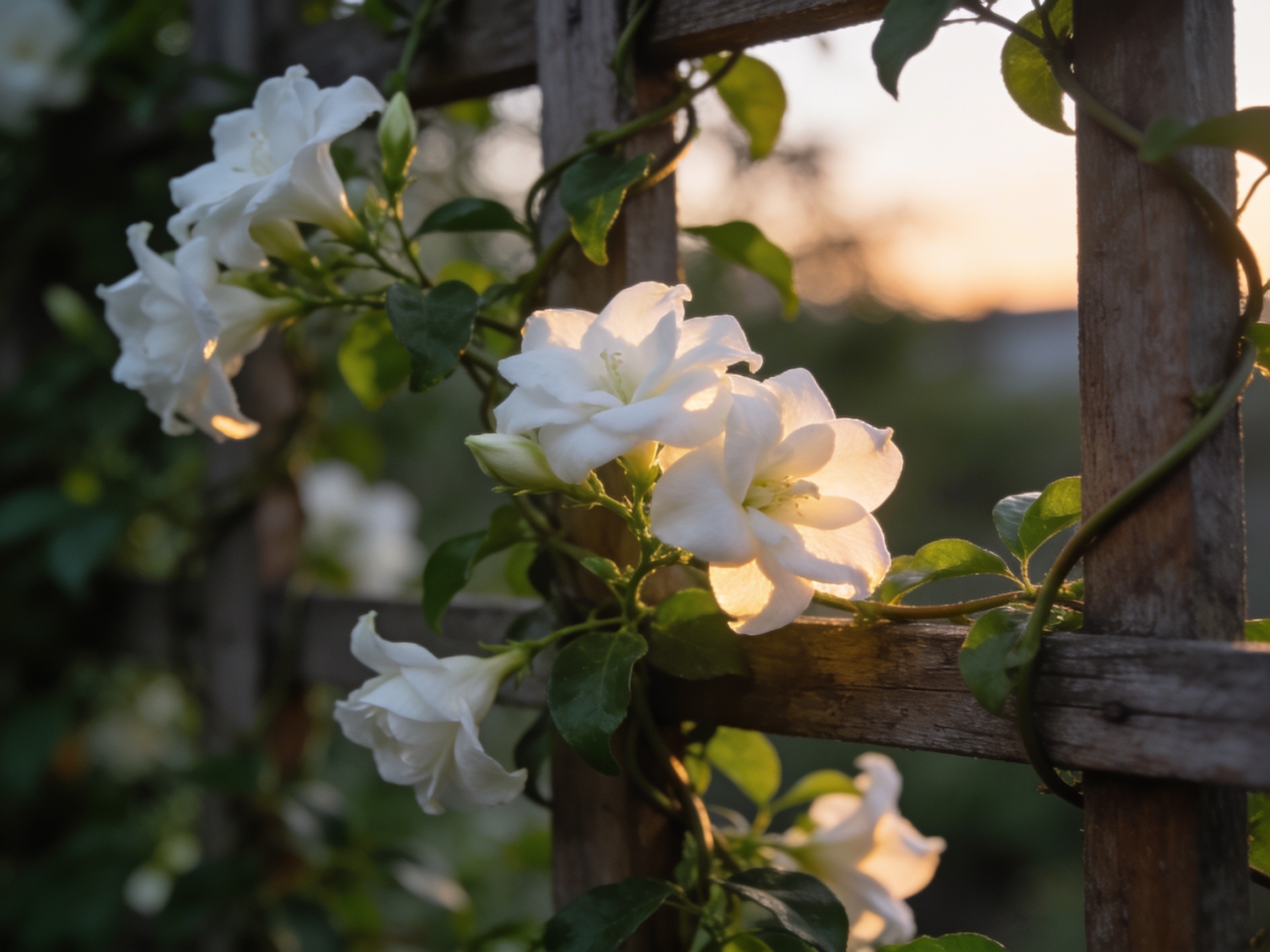
Jasmine symbolizes love, beauty, and sensuality, and it holds deep cultural roots in South Asia and the Middle East, where it's often woven into garlands for weddings.
Jasmine wants full sun to partial shade and well-draining, fertile soil, and most varieties climb readily given a trellis or support. In colder climates, jasmine is often grown as a container plant that can be moved indoors before frost.
Jasmine flowers are used to scent green tea in the popular jasmine tea blend, and jasmine essential oil is a common ingredient in aromatherapy valued for its calming effect.