Japanese maple's finely dissected leaves cascade in graceful layers, turning nearly every shade of red, orange, and gold each autumn on a tree scaled perfectly for a small garden.
Native to Japan, Korea, and China, Japanese maple has been cultivated into hundreds of cultivars, ranging from upright specimen trees to weeping, cascading forms, and it remains a centerpiece of traditional Japanese garden design.
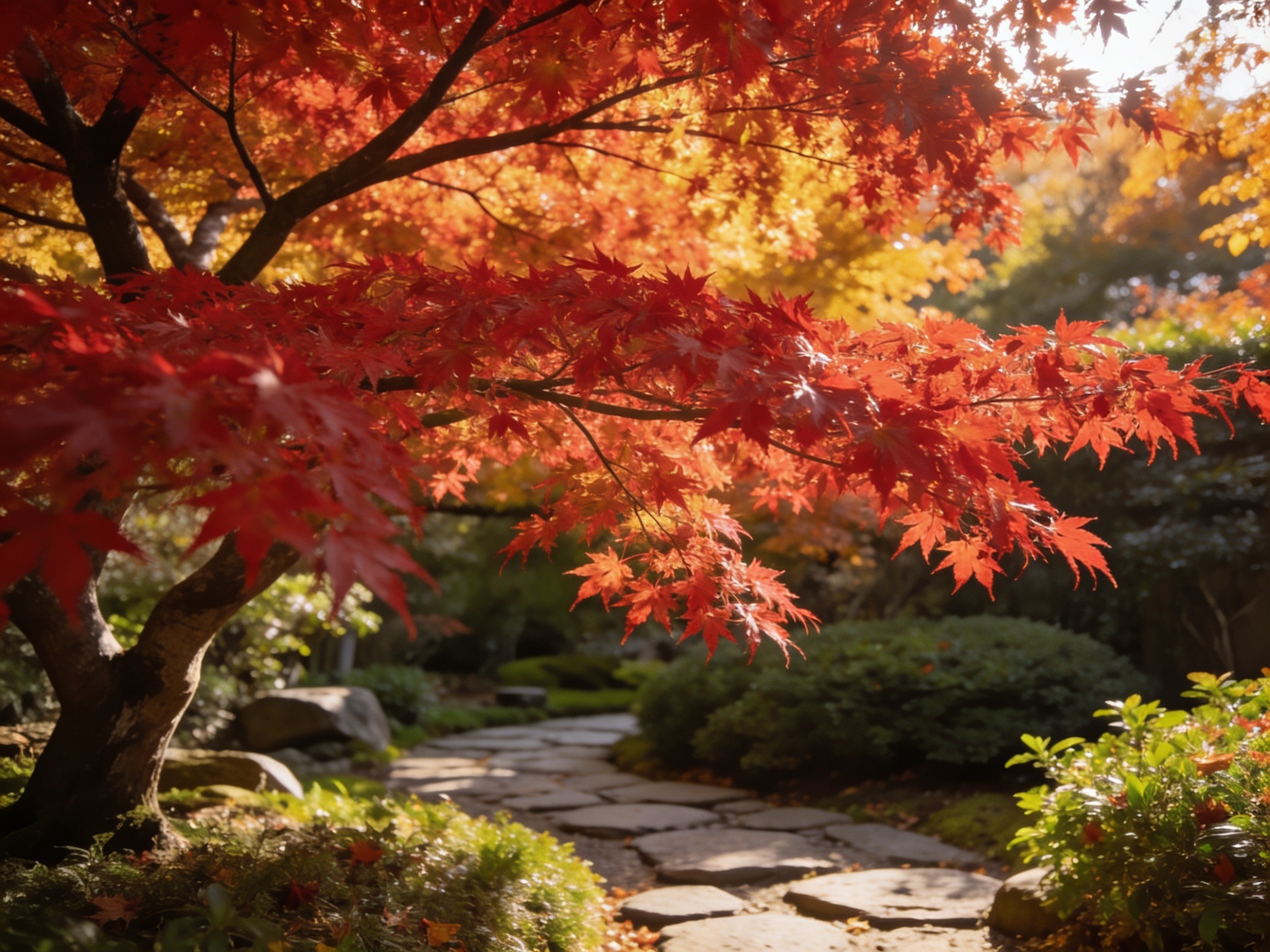
Japanese maple prefers partial shade, especially protection from hot afternoon sun, which can scorch its delicate leaves. Moist, well-draining soil and shelter from strong wind help it thrive, and it rarely needs pruning beyond removing dead or crossing branches.
Planting Japanese maple where it gets some protection from late-day sun and drying wind is the single most effective way to prevent the scorched, browning leaf edges common in hot climates.