Iris takes its name from the Greek goddess of the rainbow, a fitting tribute to a genus that produces some of the most intricate and colorful blooms of any garden perennial.
Native across the Northern Hemisphere, iris includes bearded, Siberian, Japanese, and many other distinct types, each with its own preferred growing conditions and bloom style. Its sword-like foliage adds vertical structure to a border even outside the relatively brief spring bloom period.
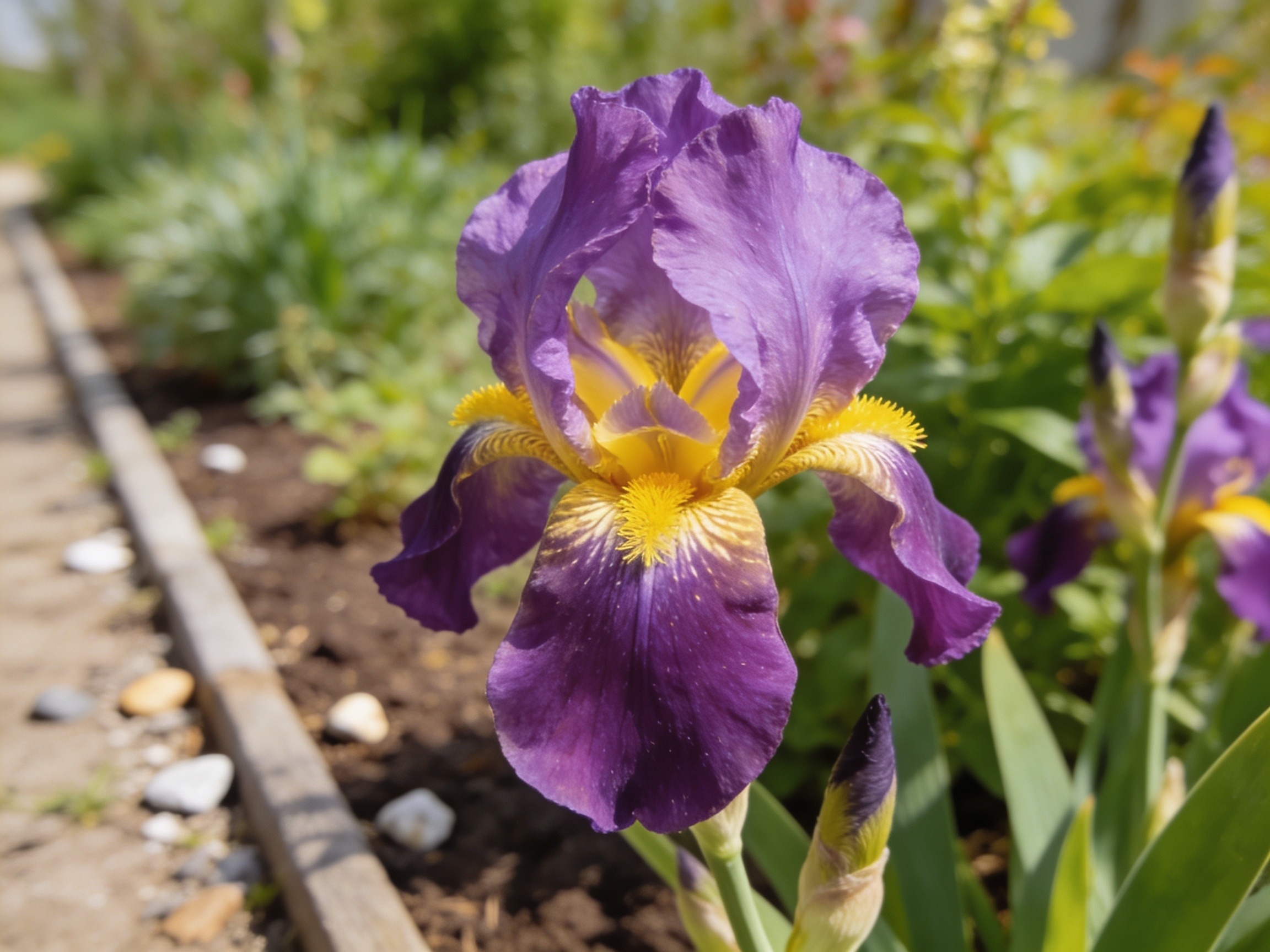
Iris symbolizes wisdom, hope, and valor, and its three-petaled form is often connected historically to the fleur-de-lis, a symbol long associated with French royalty.
Bearded iris wants full sun and well-draining soil, planted with the top of its rhizome exposed slightly above the soil surface to avoid rot. Dividing overcrowded clumps every three to five years, right after flowering, keeps plants blooming vigorously and prevents the center of the clump from dying out.
The root of certain iris species, known as orris root, has a long history of use in perfumery and traditional herbal remedies, though most garden iris varieties are grown strictly as ornamentals today.