Holland Tulips
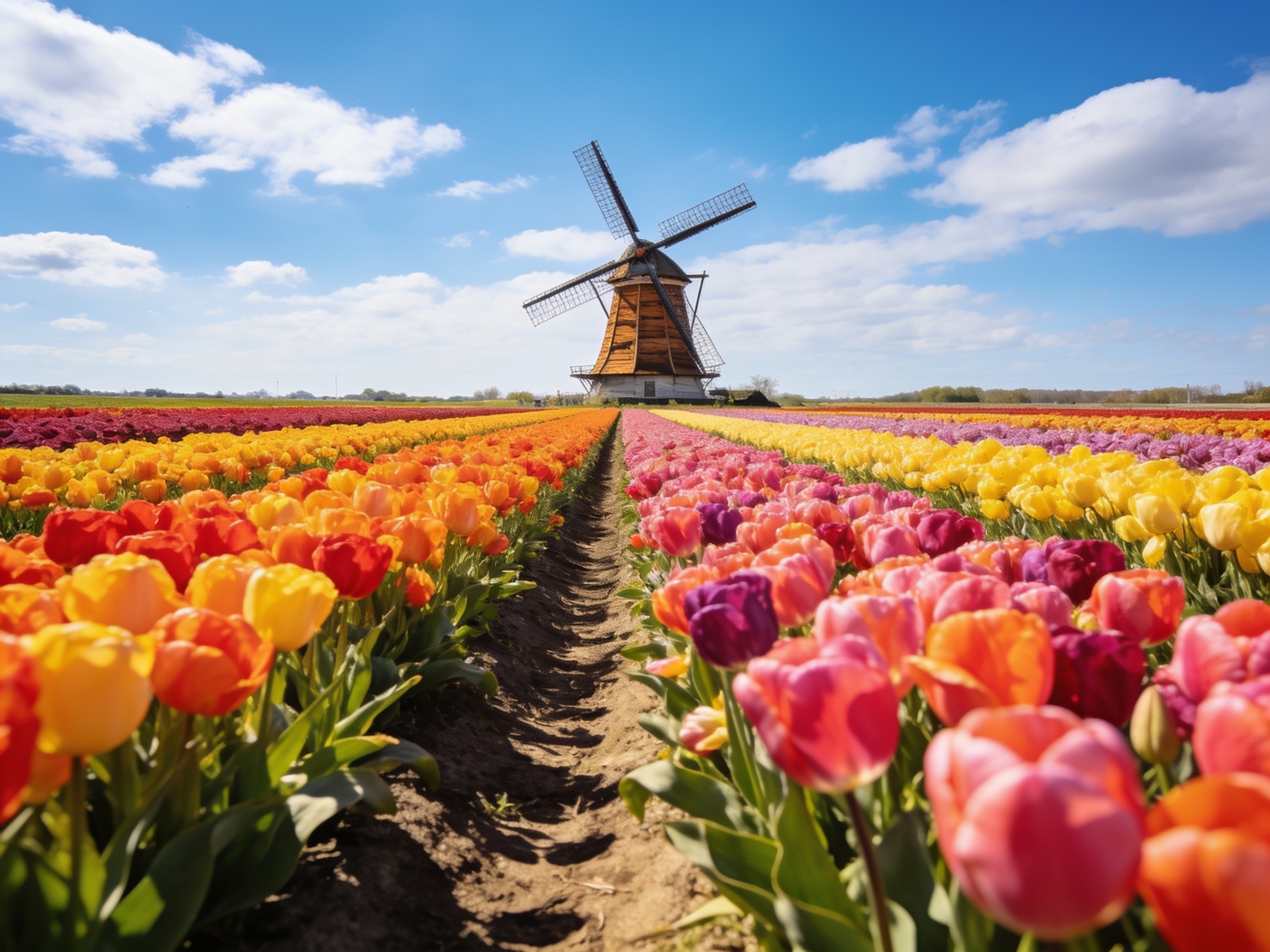
Mention Holland and tulips come to mind almost as quickly as windmills. The flower's bold, bulbous shape and huge range of colors have made it one of the most recognizable garden flowers in the world — though its story starts far from the Netherlands.
A Bulb Worth More Than a House
Tulips actually originated in the Ottoman Empire and only reached Europe in the late 1500s, introduced to Leiden University by botanist Carolus Clusius. They caught on so fast in the Netherlands that a single bulb of the rare striped variety Semper Augustus once sold for 6,000 florins — roughly 40 times the average annual income at the time. That early-17th-century frenzy, now known as "Tulip Mania," is still used today as shorthand for an economic bubble; when the market collapsed, it left many Dutch traders financially ruined.
Color and Growing Conditions
Beyond their history, tulip colors have taken on their own meanings — red for passion, white for pure love, yellow for concern for someone dear. Tulips thrive best in temperate climates with cool springs and early summers, much like Holland's own weather. In warmer regions where that natural chill isn't available, growers rely on greenhouses to recreate the cooler conditions tulips need to perform their best.
If your climate runs warm, a few months of bulb refrigeration before planting can substitute for the natural winter chill tulips need to bloom well.