Hibiscus laevis: The Halberd-Leaf Rosemallow
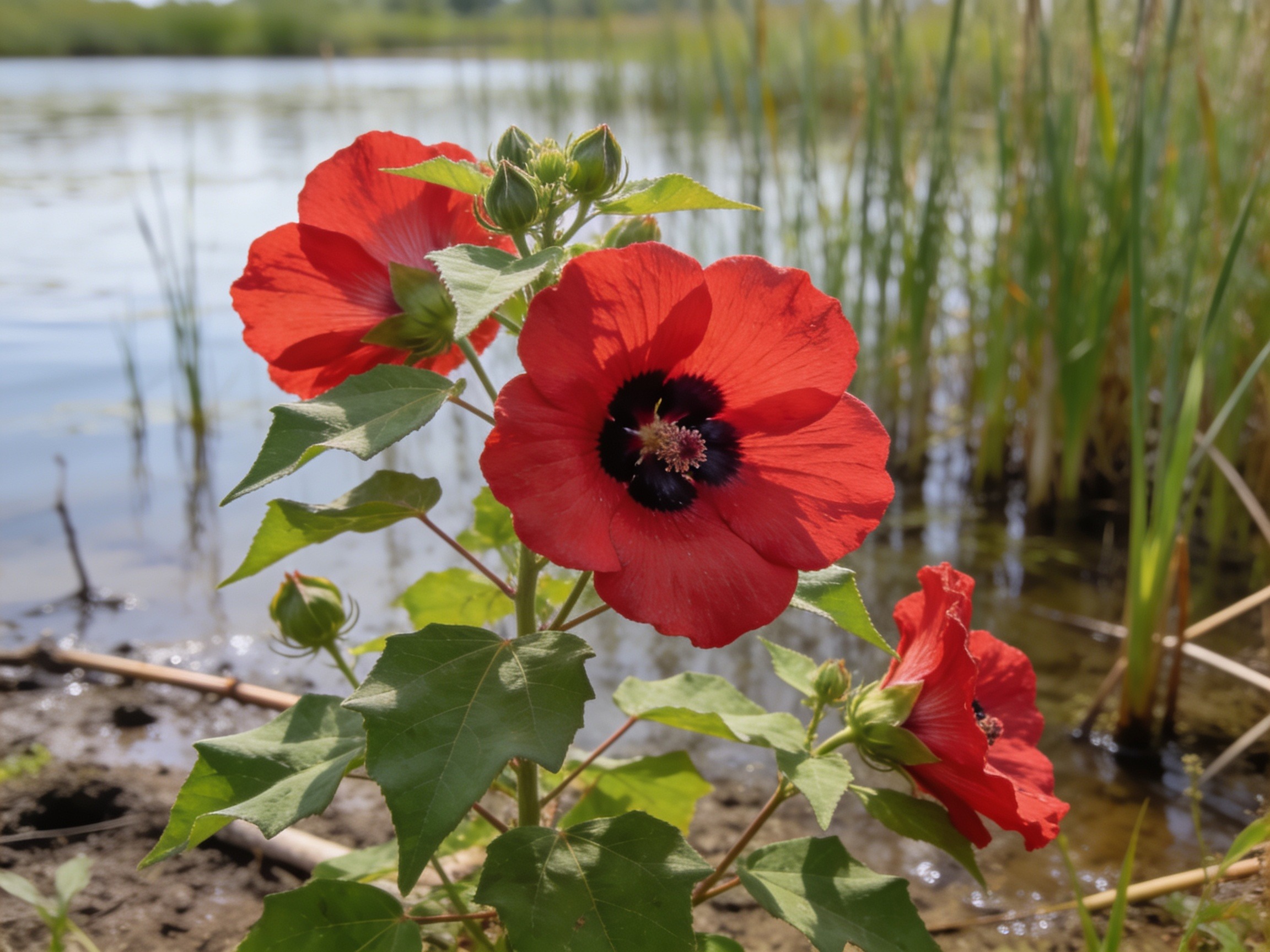
Native to eastern and central North America, Hibiscus laevis — commonly called the halberd-leaf rosemallow — is a wetland-loving perennial known for its distinctively shaped leaves and short-lived but spectacular blooms.
A Distinctive Leaf Shape
This herbaceous perennial can reach around two meters tall on hairless, unbranched stems. Its leaves, divided into three to five pointed lobes, resemble a medieval halberd — the central lobe noticeably larger than those on either side — making the plant easy to identify at a glance.
Bloom and Habitat
Flowers open up to 15 centimeters across, usually light pink or white with a rich purplish-pink or maroon throat — striking, but each bloom lasts only a single day, over a blooming window running mid-summer to early fall. The plant favors partial sun and consistently moist conditions, tolerating clay or sandy soil and even poor drainage as long as water is plentiful; it's most often found along streams, marshes, and pond edges rather than in typical garden beds. Full sunlight is needed for the flowers to open completely, and the leaves tend to drop if conditions get too dry.
If you have a naturally soggy corner of the yard near a pond or ditch, this hibiscus is a good native choice — it thrives exactly where many other flowering perennials would struggle.