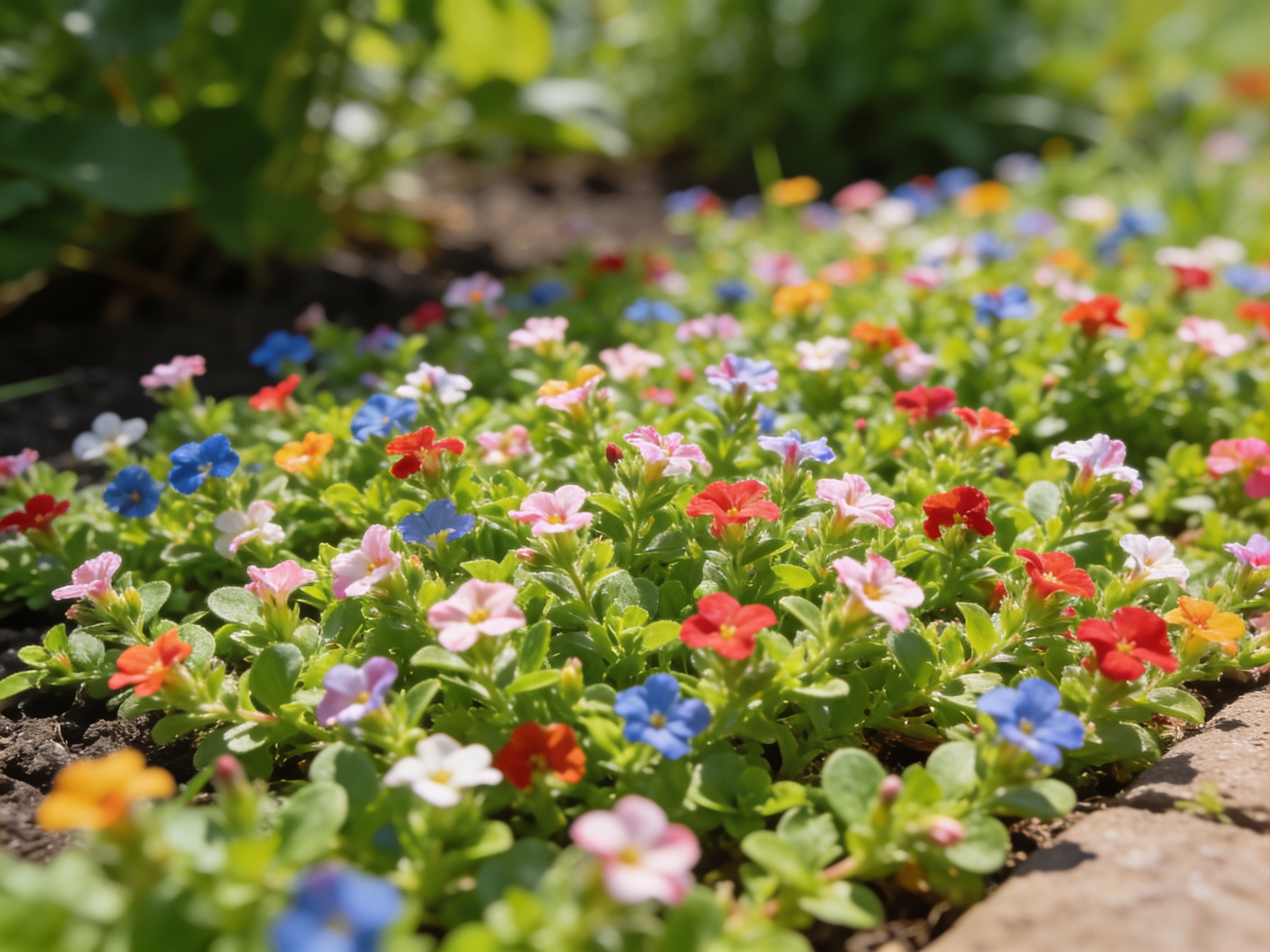
A good ground cover does the work a lawn or mulch would otherwise do, while adding texture and, often, flowers.
Where They Solve Problems
Ground covers are especially useful on slopes where mowing is difficult or erosion is a concern, in deep shade where grass struggles, and in awkward narrow strips between a walkway and a fence. A well-established planting also suppresses weeds nearly as effectively as mulch, without needing to be reapplied.
Matching the Plant to the Spot
Creeping thyme and sedum handle hot, dry, sunny spots well, while sweet woodruff and ajuga are better suited to shady, moist ground. Vinca and pachysandra are classic choices for difficult dry shade under trees, where few other plants thrive.
Give New Plantings Time
Most ground covers need a full season or two to fill in and knit together into a dense mat. Regular watering and occasional weeding during that establishment period pay off with a planting that needs very little maintenance once mature.