Gardening with Perennials
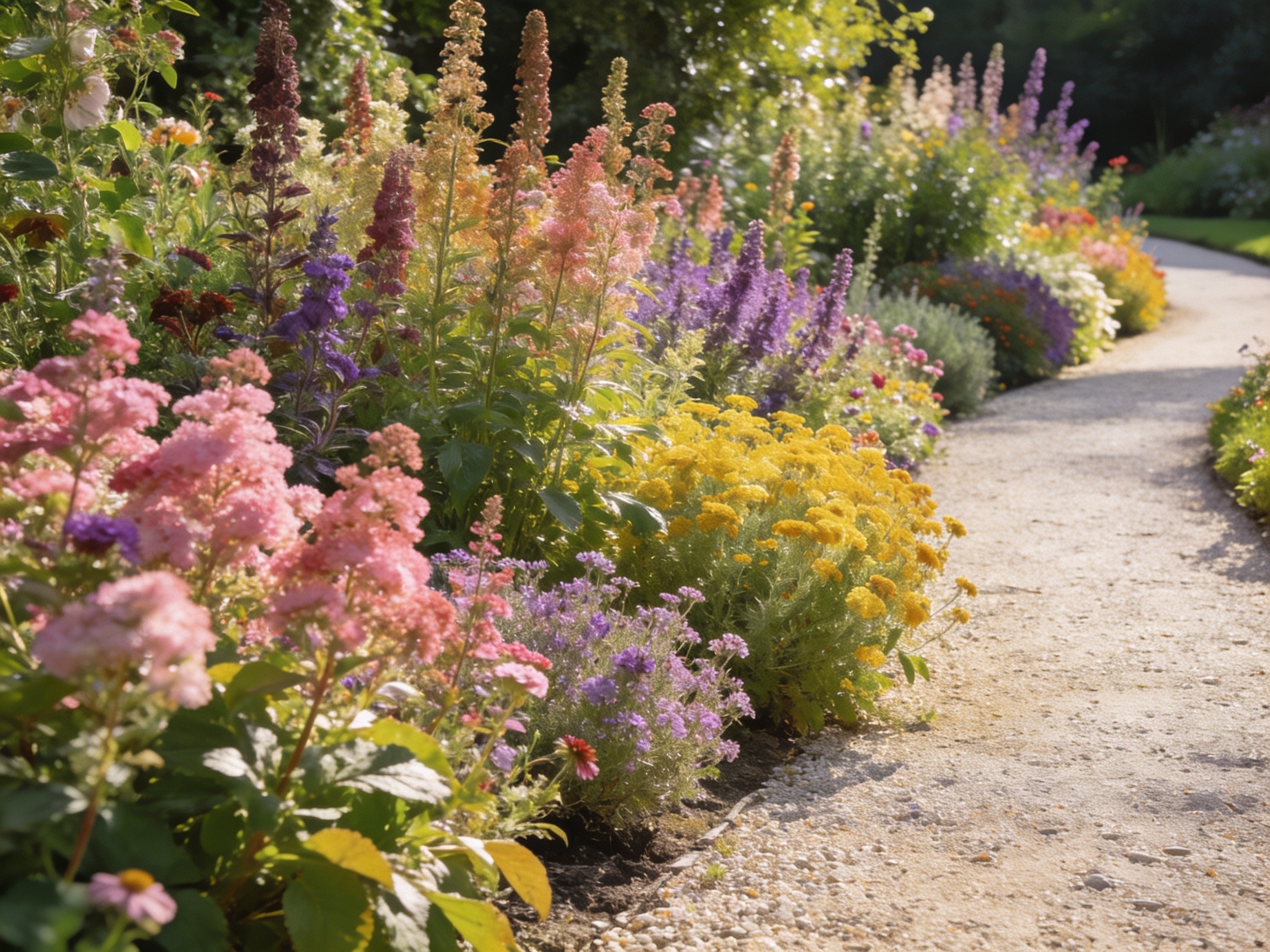
Perennials offer something annuals can't: a garden that develops real structure and character over the years, deepening rather than starting from scratch each spring.
Building Layers
A well-designed perennial bed usually works in layers — taller plants toward the back or center, mid-height plants filling the middle ground, and low, spreading plants along the edge. This layering creates depth and ensures every plant gets its share of visibility and light.
Repeating a few key plants throughout a bed, rather than using one of everything, gives the design cohesion and rhythm.
Include a few plants valued for their foliage — hosta, heuchera, ornamental grasses — not just flowers, to keep a bed visually interesting even between bloom cycles.
Letting the Garden Evolve
Perennial gardens are never really finished — plants spread, some thrive better than expected, and others need to be moved or replaced. Treating the design as something that evolves over several seasons, rather than a fixed plan, leads to a garden that actually fits its conditions.