Edible Flowers
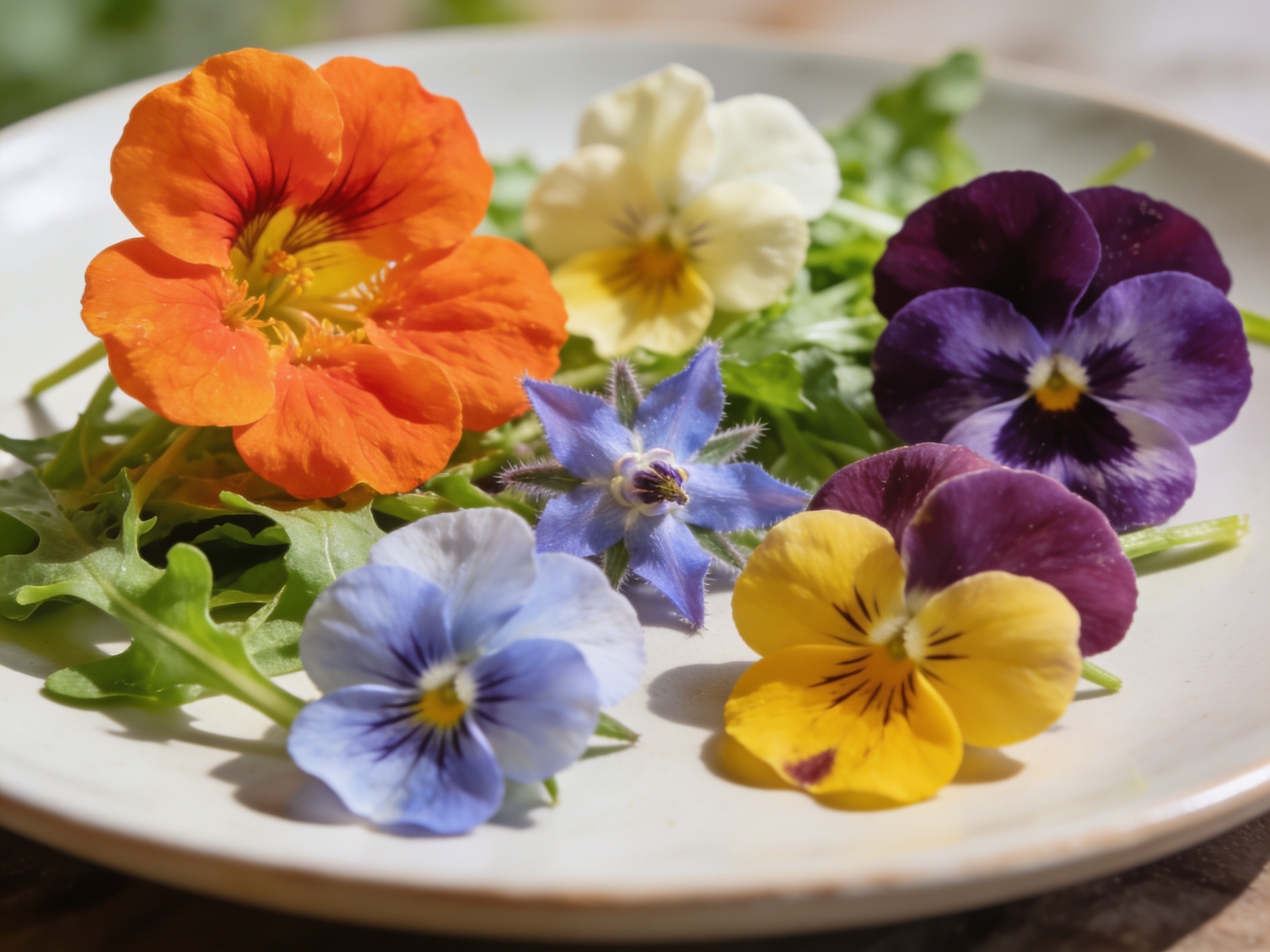
Many common garden flowers are just as edible as they are ornamental, adding color, mild flavor, and an unexpected garnish to salads, desserts, and drinks — but knowing which ones are safe, and which parts, matters as much as knowing which flowers to grow.
Reliable Choices
Nasturtiums have a peppery, watercress-like bite and both the flowers and leaves are edible. Pansies and violas are mild and slightly sweet, and borage flowers carry a light cucumber flavor. Squash blossoms, often stuffed and fried, are a classic edible flower in their own right.
Rose petals are edible too, with the white base of the petal trimmed away since it can taste bitter.
Caution: Only eat flowers you've identified with certainty as edible and grown without pesticides — many ornamental flowers, including lily of the valley and foxglove, are toxic. Florist flowers are never safe to eat, since they're typically treated with chemicals not approved for food.
Using Them in the Kitchen
Edible flowers are best used fresh, added at the last moment as a garnish, since most wilt quickly once picked. Freezing individual blossoms into ice cubes is a simple way to add a decorative touch to drinks without worrying about the flowers wilting.