Drought-tolerant doesn't mean no water ever — it means a plant that can go longer between waterings once established.
What to Look For
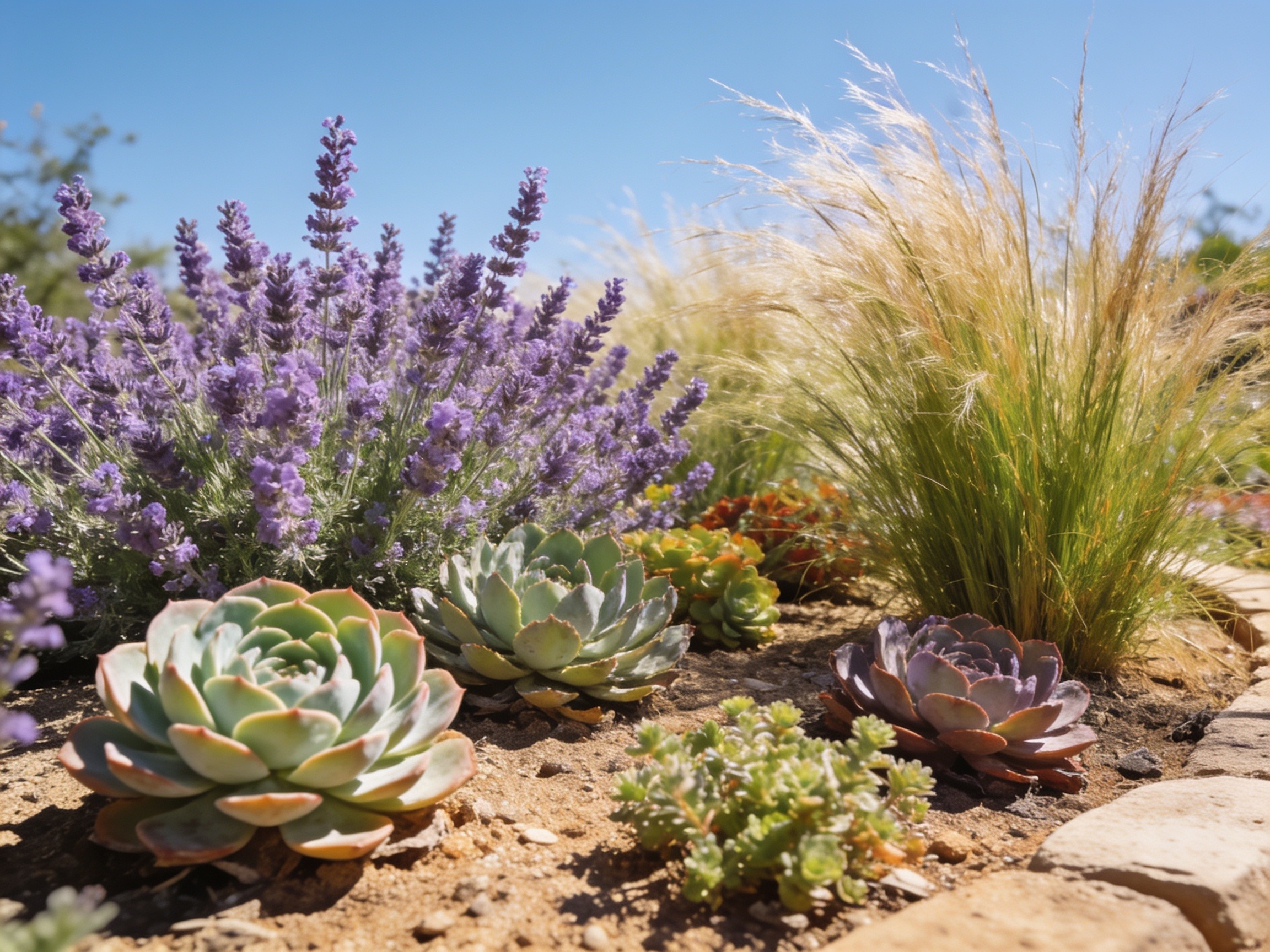
Plants adapted to dry conditions often share physical traits — silvery or gray foliage, thick or waxy leaves, fine hairs, or deep taproots — all strategies for conserving or accessing water. Lavender, yarrow, sedum, ornamental grasses, and Russian sage are all reliable, widely available choices.
The Establishment Period Still Needs Water
Even the toughest drought-tolerant plant needs regular watering for its first season or two while its root system develops. Cutting off water too soon, assuming the plant is already drought-proof, is one of the most common reasons a newly planted xeriscape bed fails.
Good Drainage Matters as Much as Low Water
Many drought-tolerant plants actually prefer lean, fast-draining soil and can struggle or rot in heavy, wet clay. Amending planting areas with grit or coarse sand often does more for their long-term success than the watering schedule does.