Climbing Vines
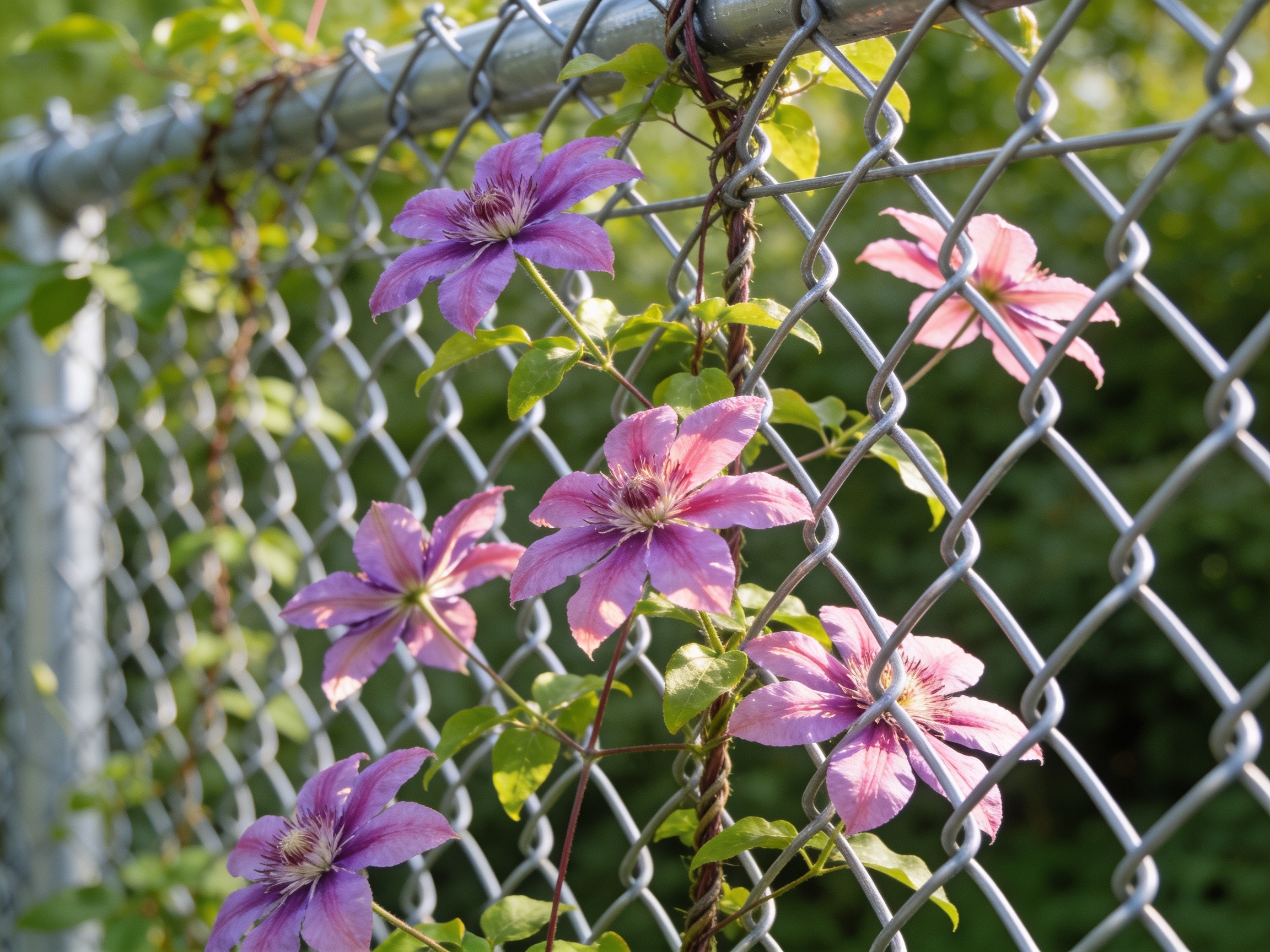
A climbing flower vine does double duty — it's decorative, and it can quietly solve a privacy problem a fence alone can't.
Privacy and Decoration
Vines planted along a chain-link fence fill in the gaps a see-through fence leaves open, and along a street-facing edge of the property they shield the yard from passing eyes. Beyond privacy, vines dress up trellises, arbors, rain gutters, porch posts, mailboxes, and lamp posts — even a doorway, for the more adventurous. Varieties range from about 6 feet to as long as 40 feet, in both perennial forms and self-seeding annuals that behave like perennials by reseeding themselves each spring.
Low Maintenance Once Established
Watch a newly planted vine closely for its first week or so to make sure it's taking well, then it largely takes care of itself. Dry climates need occasional extra watering, and periodic pruning to remove old blooms keeps the vine looking its best, even when grown in a pot outdoors. A little early training helps point new growth in the right direction — after that, it climbs on its own. Jasmine, clematis, hydrangea, and morning glory are among the most popular flowering vine choices to start with.
Let the eventual planting spot dictate the vine's expected length — a short six-foot variety won't cover a tall privacy fence, while a forty-foot vine may overwhelm a small trellis.