
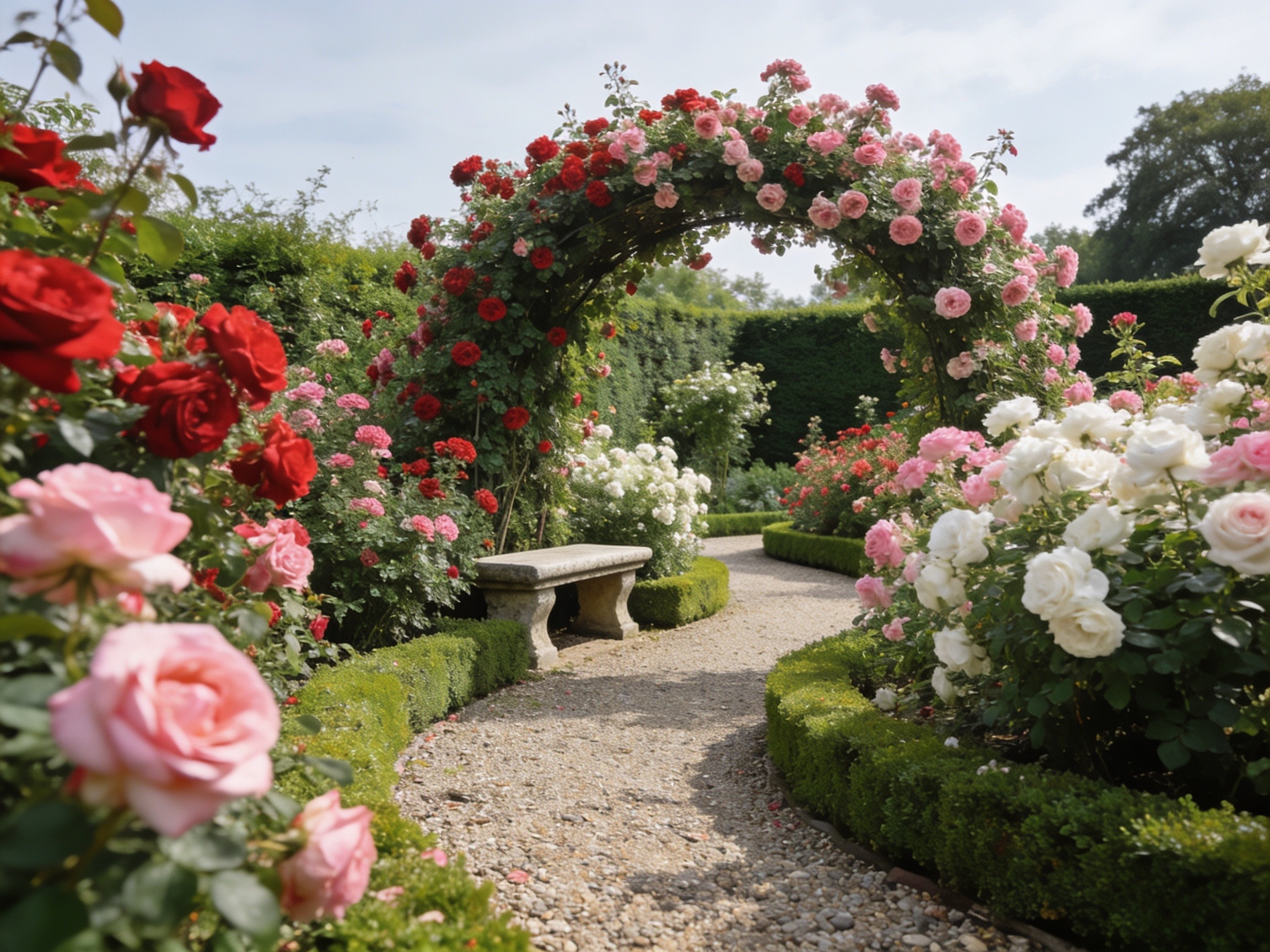
A classic rose garden follows a formal design tradition dating back centuries — symmetrical beds, structured paths, and roses as the clear centerpiece of the whole design.
Formal Structure and Symmetry
A traditional rose garden typically arranges beds in geometric patterns — squares, circles, or rectangles — with clearly defined paths of gravel, brick, or stone between them. This formal structure gives the garden a sense of order that lets the roses themselves be the visual focus.
Supporting Elements
Low boxwood or lavender hedges are commonly used to edge rose beds, adding year-round structure even when roses aren't in bloom. A central feature — a fountain, sundial, or arbor — often anchors the design and gives the eye a natural focal point.
Maintaining the Look
Uniform pruning and consistent spacing between plants are essential to preserving a classic rose garden's tidy, formal appearance over time.