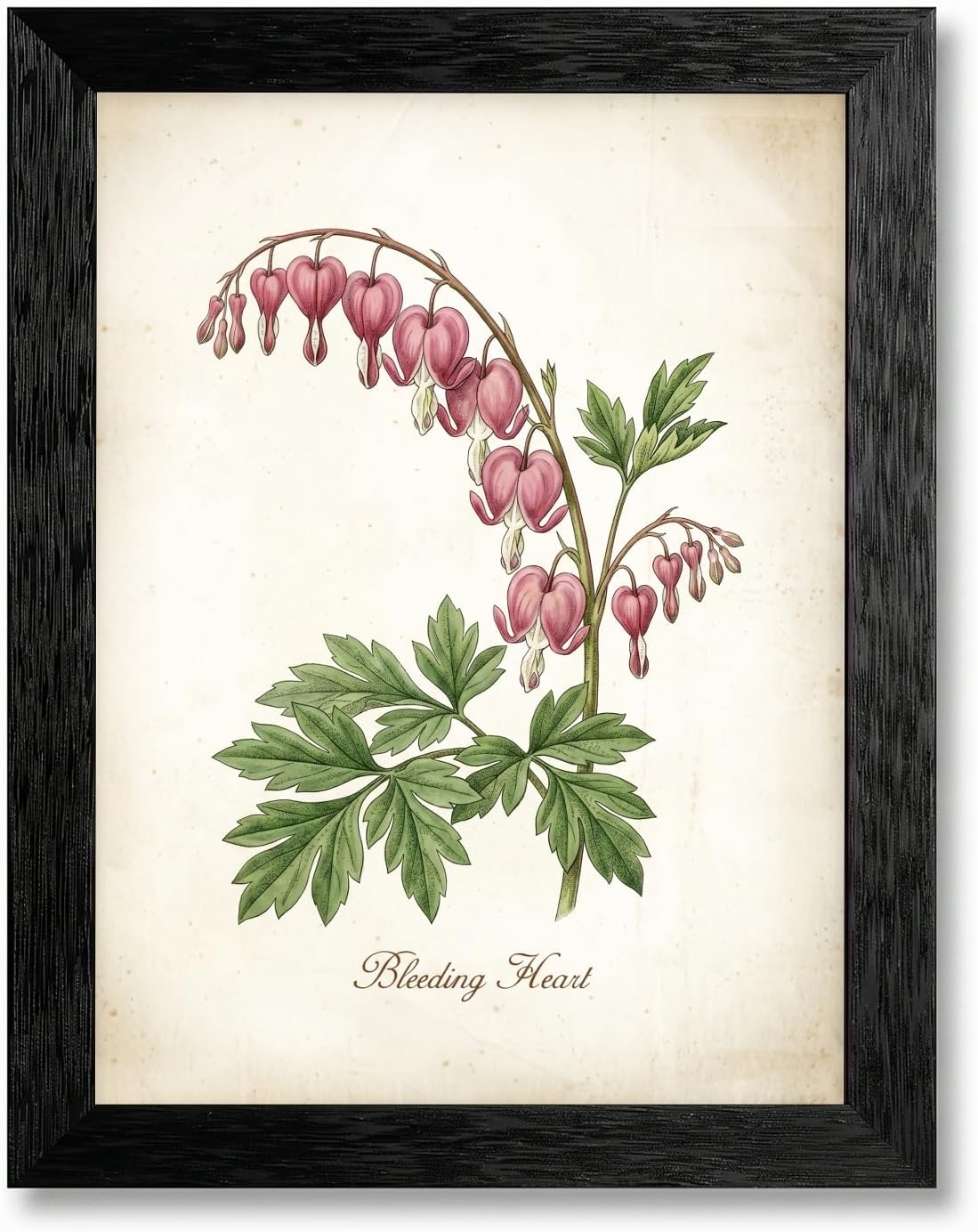
Bleeding hearts produce rows of perfectly heart-shaped blooms dangling from arching stems, one of the most instantly recognizable and beloved shapes in the perennial garden.
Native to Asia and North America, bleeding heart is a classic shade garden perennial that emerges early in spring, often before many other plants have even begun to grow. Its fern-like foliage and dangling flowers pair beautifully with hostas and ferns in a woodland-style planting.
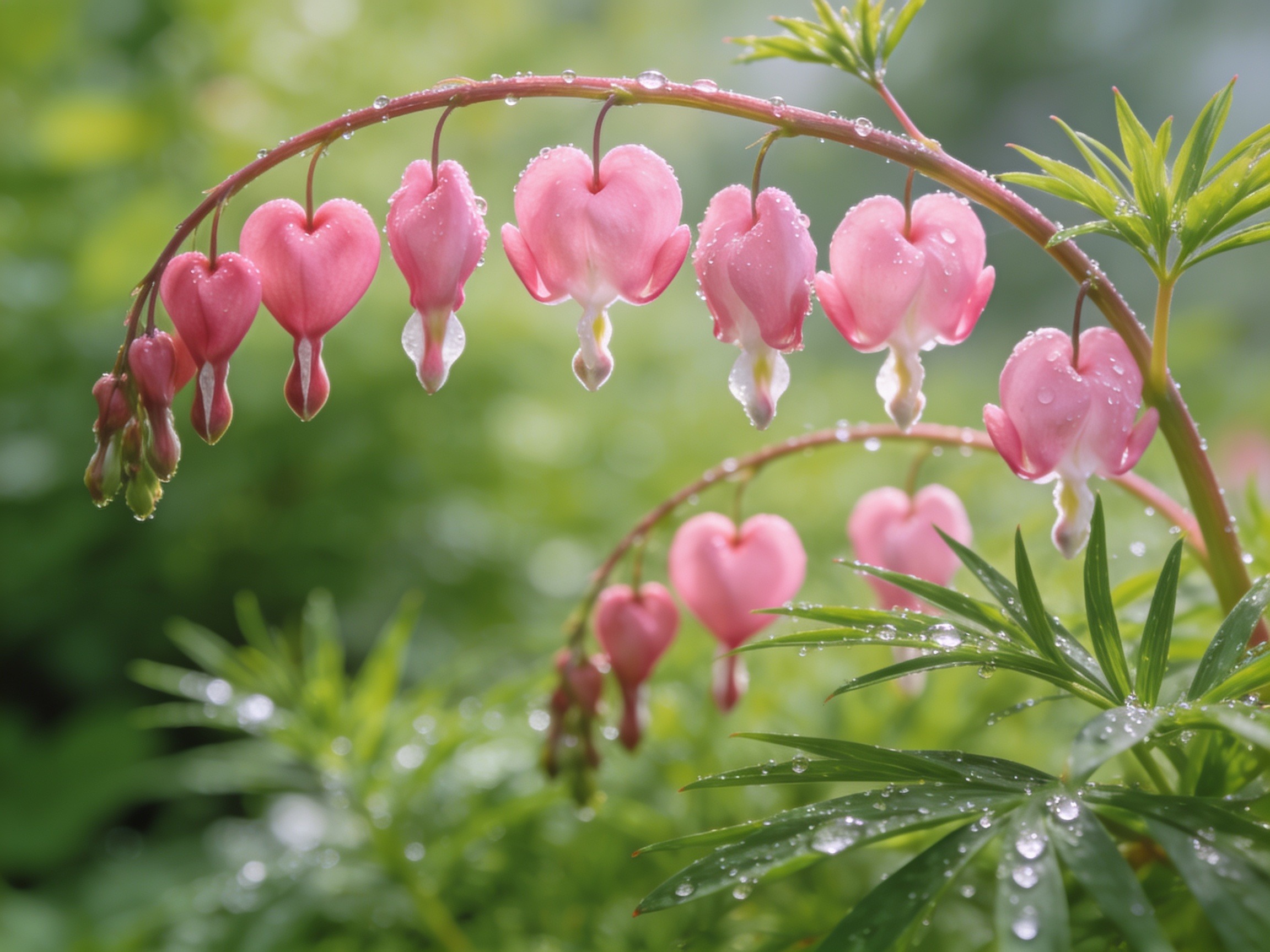
True to its shape, bleeding heart symbolizes romantic love and compassion, though its dangling, almost mournful form has also given it associations with heartbreak in Victorian flower symbolism.
Bleeding heart wants partial to full shade and rich, moist, well-draining soil, closely mimicking its native woodland habitat. It's normal for the foliage to yellow and die back completely by mid-summer as the plant goes dormant — simply let it fade naturally and it will return reliably the following spring.
All parts of the bleeding heart plant are toxic if ingested, and it has no history of safe herbal or culinary use — it should be grown strictly as an ornamental and kept away from pets and children.