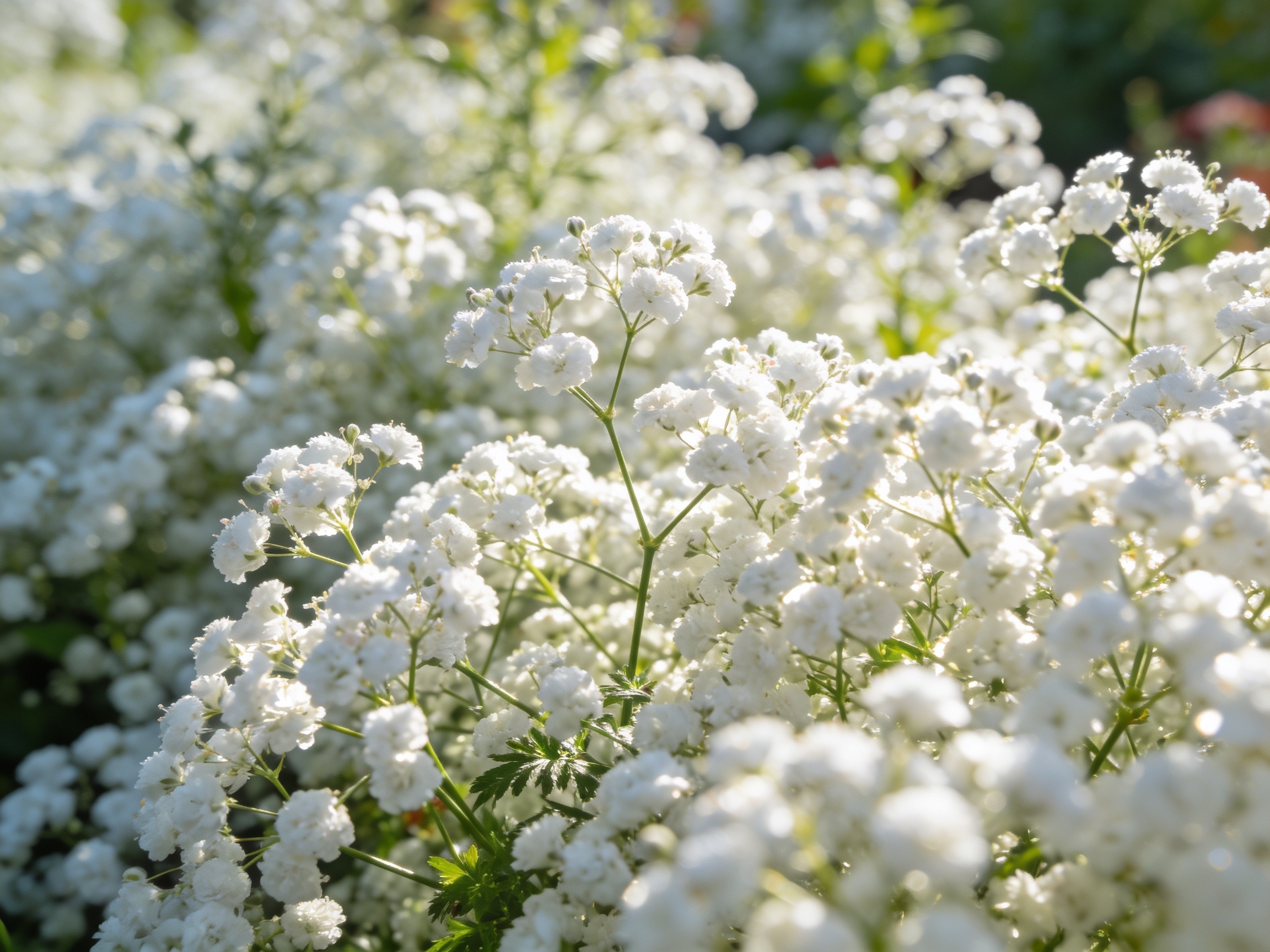
Gypsophila, commonly called baby's breath, forms an airy, billowing cloud of tiny white or pale pink flowers on wiry, branching stems — instantly recognizable as the classic filler in bouquets and floral arrangements.
In the garden, its delicate texture softens the edges of bolder blooms, and its flowers dry beautifully on the stem, making it a favorite for both fresh cutting gardens and everlasting arrangements.
Baby's breath symbolizes everlasting love, innocence, and purity of heart, which is precisely why it has become such a fixture of wedding bouquets, christenings, and other sentimental floral occasions.
Baby's breath needs full sun and, above all, alkaline, well-drained soil — add lime if your soil runs acidic. It resents being transplanted once established due to its deep taproot, so choose its permanent spot carefully from seed or a young nursery plant. Stake taller varieties in windy sites, and cut stems for drying just as the flowers fully open.
Gypsophila has little history in herbal medicine; the root of some species contains saponins historically used industrially as a mild soap and foaming agent rather than in remedies.